Railcars
- Activity
- Collection
- Age
- All ages
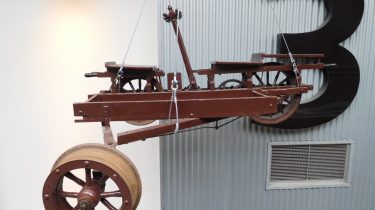
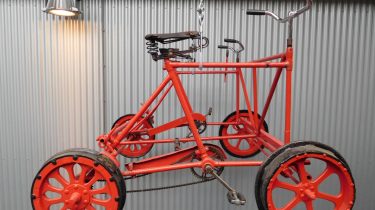
Four different types
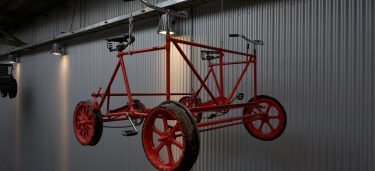
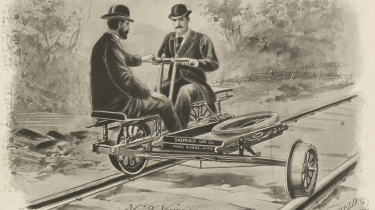
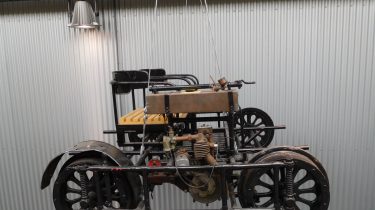
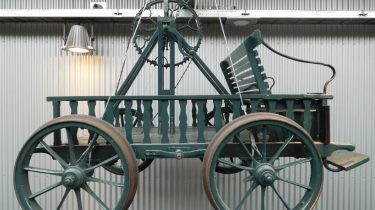
Four different draisines are on display on the museum ceiling. The Simplex rail bike is the lightest; it weighs barely more than two bicycles. It was manufactured by the Dutch bicycle manufacturer Simplex. Until the Second World War, they were found throughout the country. With the hand-wheel draisine, two people use cranks to turn the chain that drives the rear wheels. The inspectors do not need to exert themselves physically; they sit on the bench at the front with a view of the track. The motor draisine or railcar has a small petrol engine that provides the propulsion. This allowed the inspectors to travel faster and cover greater distances. This Simplex M.G. was in service around 1910 with the Noord-Brabantsch-Duitsche Spoorweg-Maatschappij (NBDS). It is the only surviving vehicle from that company. The Velocipede Car is a wooden draisine that can be ridden by two people sitting opposite each other. Together, they moved a handle back and forth with their hands to drive the rear wheel. This No. 3 Velocipede Car was built around 1890, making it one of the oldest known examples of this type in the world.