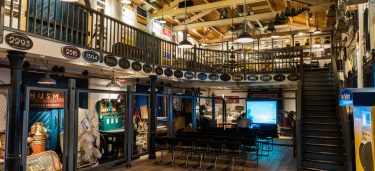
Warehouse Nijverdal
- Activity
- Exhibition
- Age
- All ages
Warehouse
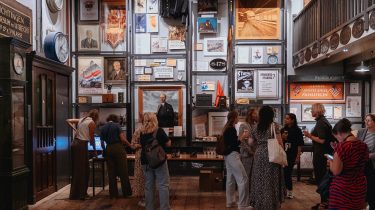
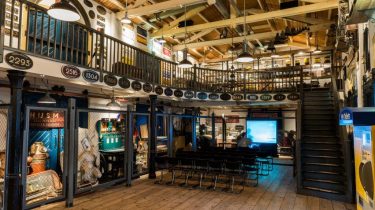
The Nijverdal warehouse stood next to Nijverdal station until the 1980s and served as a goods shed there. Every station of any significance had warehouse of this kind, which were connected to both the railway and the road network.
Shipment
Here, private individuals could hand in a parcel or item for dispatch within the country or abroad. Once payment had been made, the consignment was packed and you were given a consignment note bearing your name, address and the destination, after which the parcel was taken to the goods shed. From there, it was transported by train and then by Van Gend & Loos lorry to its final destination.
End of general cargo transport
One of the factors that led to the end of general cargo transport by rail was the emergence of mini-containers that fitted into Van Gend & Loos’s semi-trailers. The high costs of transhipment from train to lorry also ultimately proved the undoing of general cargo transport.
New destination
At the end of the 1980s, the warehouse was demolished and rebuilt in the Railway Museum to serve as a restaurant. In the current museum, the shed is essentially what it once was again: storage space for ‘goods,’ or items from our collection. The ‘Children of Versteeg’ exhibition can also be found here, where the World War II collection has been given a place.