Controversial services
Its agreement in principle with the Germans meant that before long, NS was involved with war operations. For one thing, NS was under an obligation to transport all German soldiers and their gear, as well as all Wehrmacht goods. In addition, NS was forced to hand over any equipment and rolling stock that the Germans needed in their battle against the Soviet Union. NS was also tasked with transporting Dutch POWs and political prisoners up until the German border, as well as Dutch men assigned to forced employment in Germany. The NS transports that have remained its most controversial up to the present day started in 1942: the deportation of Jews, Roma and Sinti from several Dutch cities to the Westerbork transit camp in the province of Drenthe, and from there on to the German border. NS sent the bills for these transports to the Schutzstaffel (SS). Few photographs and documents of these and other controversial services to the German occupiers have survived. This may have to do with the strict obligation of confidentiality imposed on NS employees regarding all transports they performed on behalf of the Wehrmacht. In addition, the Germans are known to have destroyed a great deal of evidence in the days before the liberation.
Handing over equipment
Food supplies
Food supplies
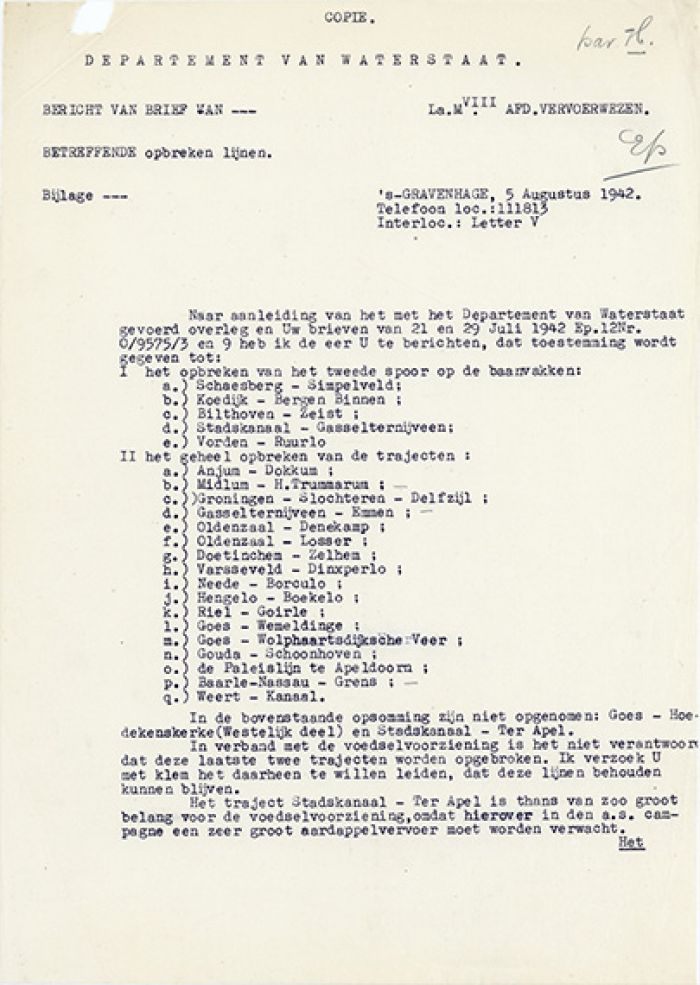
Letter from State Secretary Spitzen, HUA 948, 567.
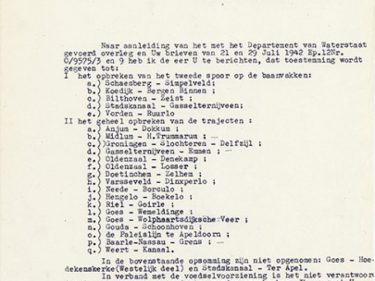
In his letter, State Secretary Spitzen warned that dismantling railways potentially threatened food supplies in the Netherlands, especially as regards the transport of potatoes on the Stadskanaal-Ter Apel route.
Railway map
Railway map
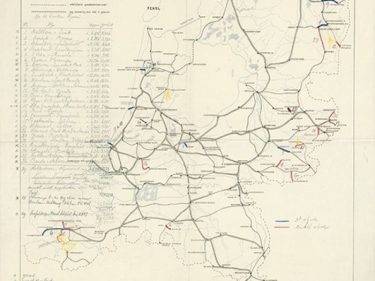
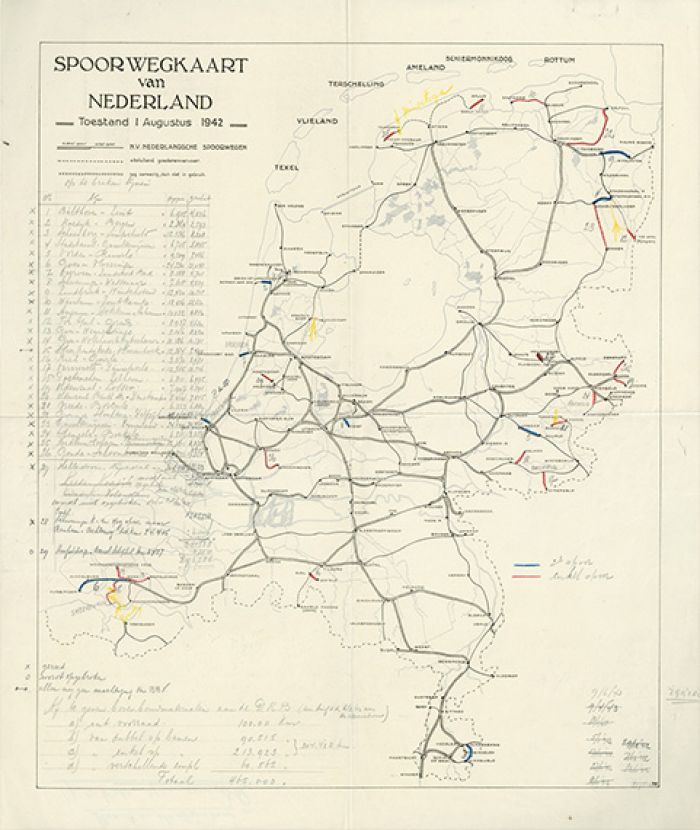
Railway maps of 1 August 1942, HUA 948, box 567.
The Germans demanded that NS provide them with the railway equipment they needed for the war against the Soviet Union. The railway map of 1 August 1942 shows which lines in the Netherlands were to be dismantled or reduced to single tracks for this purpose. After the war, a map was made depicting the situation of the railway network in July 1944.
Military transports
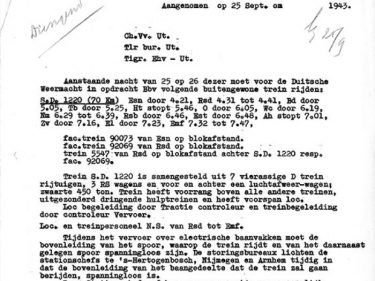
Official telegram
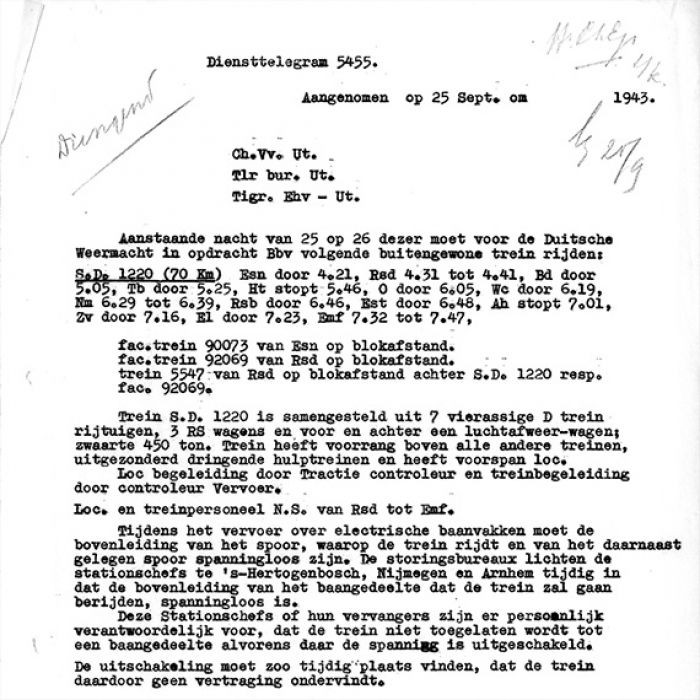
Official telegram
Official telegram dated 25 September 1943, correspondence between NS and the German Bahnbevollmächtigte, HUA 1867, Box 402.
Dutch railway stations were instructed by telegram to make extra trains available for the Wehrmacht. This is an example from 25 September 1943, when NS was ordered to arrange a special transport for the Wehrmacht. The document does not state who or what the extra train was supposed to carry. It does state explicitly though that the train was to be accompanied by an anti-aircraft carriage in front and another one in the rear, and that it was to have priority over all other transport.
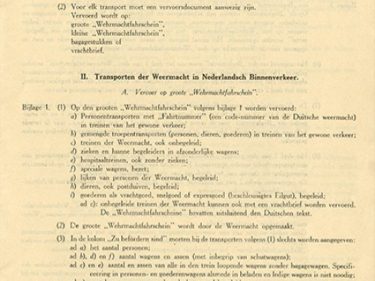
Wehrmacht transport instruction
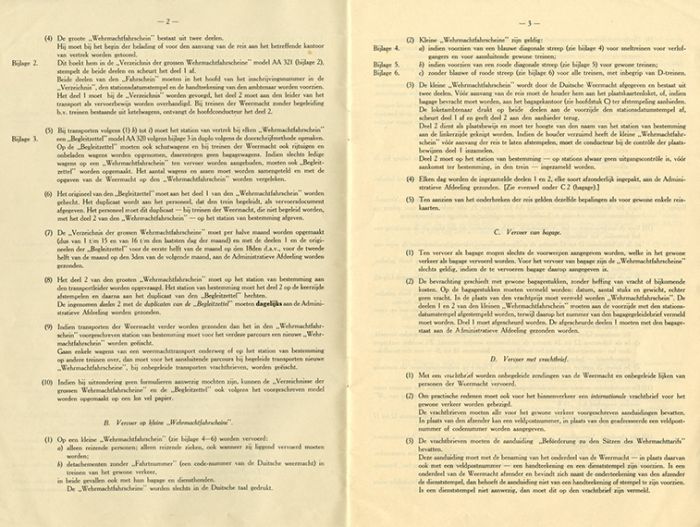
Wehrmacht transport instruction
Instruction regarding the treatment of transports performed on behalf of the Wehrmacht by Dutch railway stations (abbreviated title: I.D.W.), ca 1941, Railway Museum Collection.
NS railway station employees were meticulously informed about the execution of transports for the Wehrmacht. A detailed instruction leaflet was issued, explaining that the transport could be carried out under a group or individual Wehrmachtfahrschein (travel voucher). A group voucher was used for the transport of large groups of people, or of animals accompanied by Germans, and for the transport of corpses or goods. Individual vouchers mostly involved the transport of German passengers travelling alone.
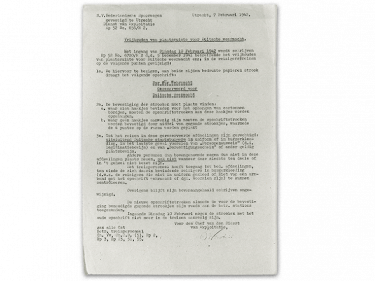
Measures in passenger trains
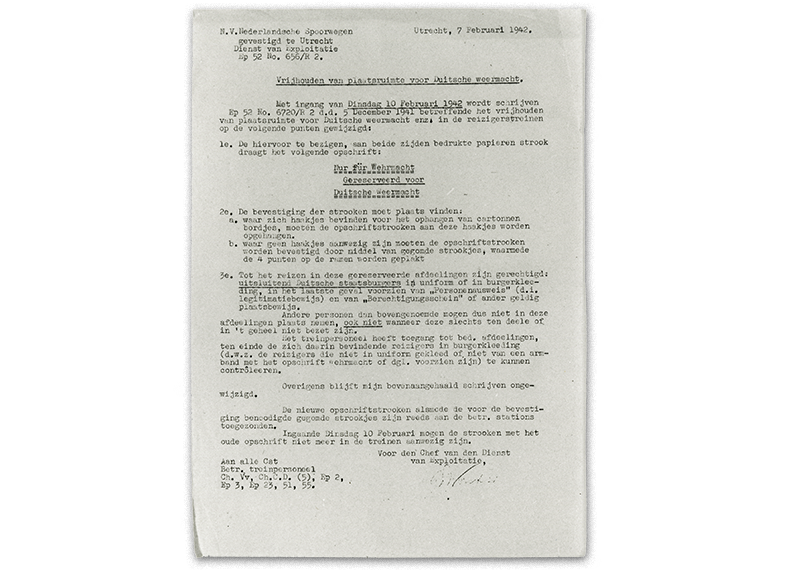
Measures in passenger trains
Written instructions by the Operations Department dated 7 February 1942, Correspondence between NS and the German Bahnbevollmächtigte, HUA 1867, Box 402.
In addition to transporting soldiers and military equipment in special trains, NS was required to reserve seats for German soldiers in regular passenger trains. Dutch citizens were not allowed to take a seat in a reserved compartment, not even if seats were available. The guard only had permission to ask the German soldiers for their ID if they were not wearing their uniforms.
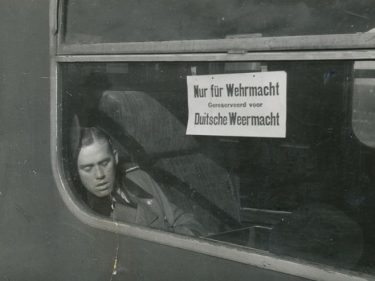
German soldier
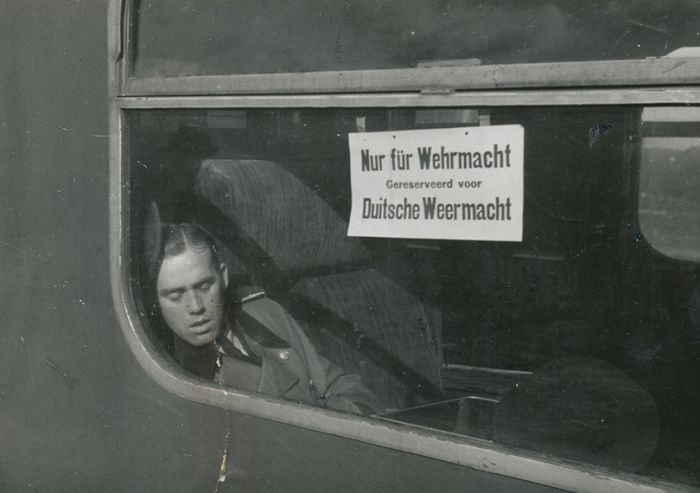
German soldier
Photograph of a German soldier asleep in a Dutch railway carriage, Beeldbank WO2-NIOD.
In this unique photograph, a German soldier is caught taking a wink in a compartment reserved for the Wehrmacht.
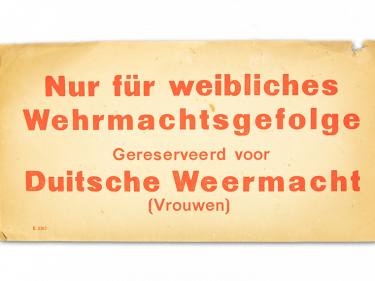
Compartment signs
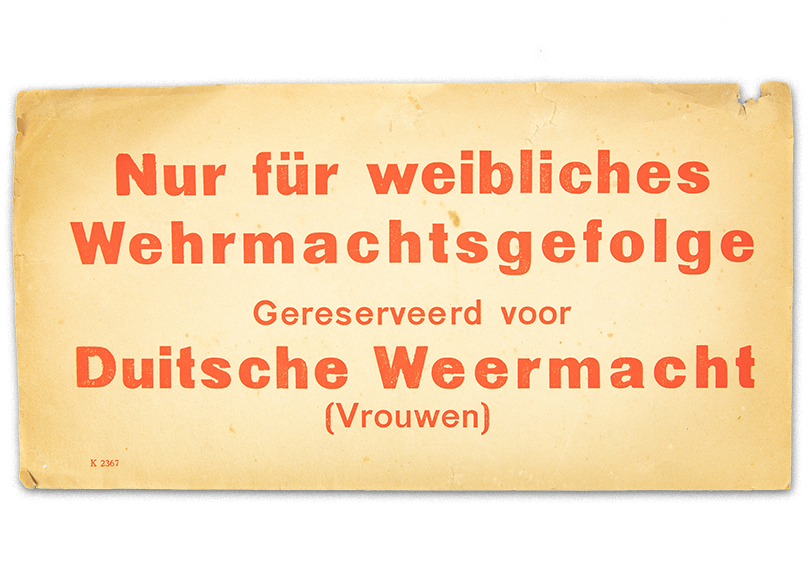
Compartment signs
Signs used to designate seats reserved for Wehrmacht personnel, Railway Museum Collection.
German military transports had absolute priority over the transport of Dutch passengers and goods. Despite being already overcrowded, every Dutch passenger train had several compartments reserved for German soldiers.
Poster
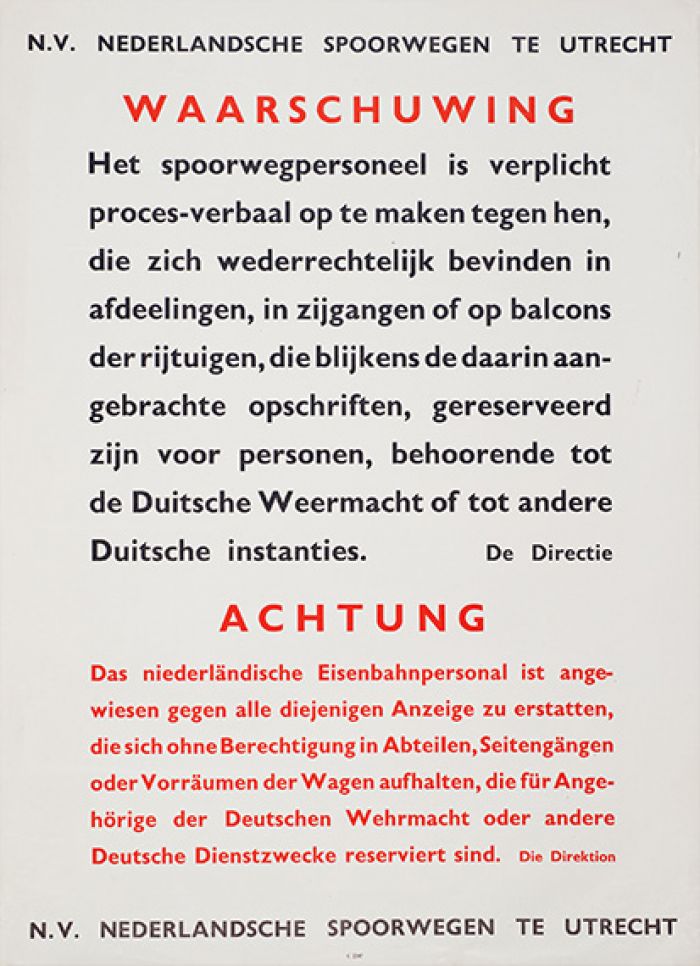
Poster
Poster announcing the order to reserve seats for members of the Wehrmacht, ca 1941, Railway Museum Collection.
This poster reminded NS employees in Dutch and German of their obligation to report any passengers who had taken a seat in compartments reserved for German soldiers. Apparently, Dutch railway employees needed a special reminder to warn them of their obligation.
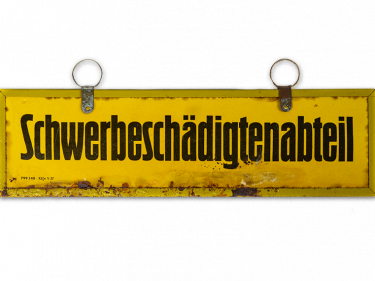
Severe casualties
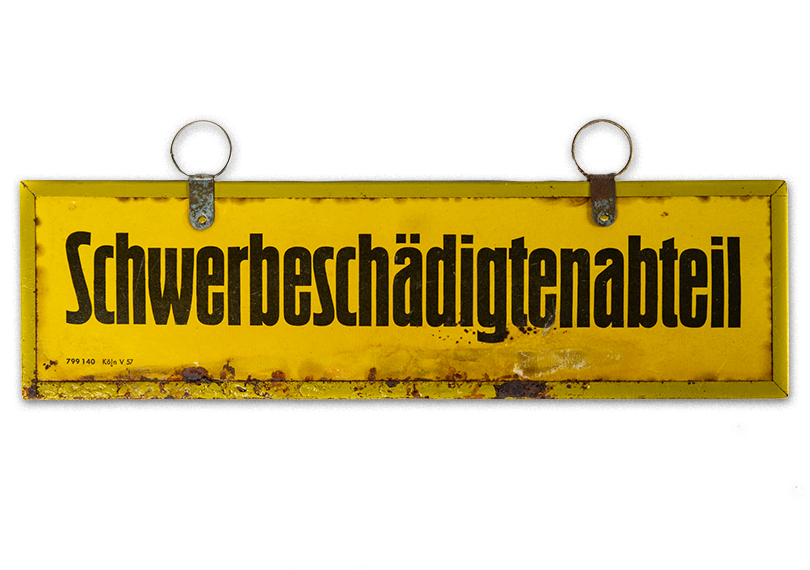
Severe casualties
Two signs from railway carriages indicating compartments reserved for severely injured German soldiers, Railway Museum Collection.
Dutch trains were also used for transporting severely injured German soldiers. To that end, NS was required to deploy hospital trains with carriages equipped almost like a real hospital. Individual soldiers who were injured or had fallen ill were transported in compartments of regular passenger trains.
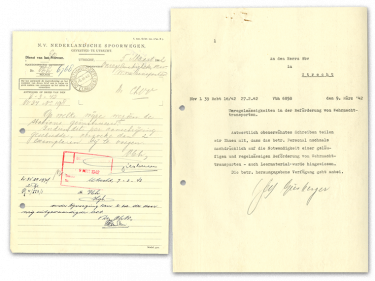
Irregularities
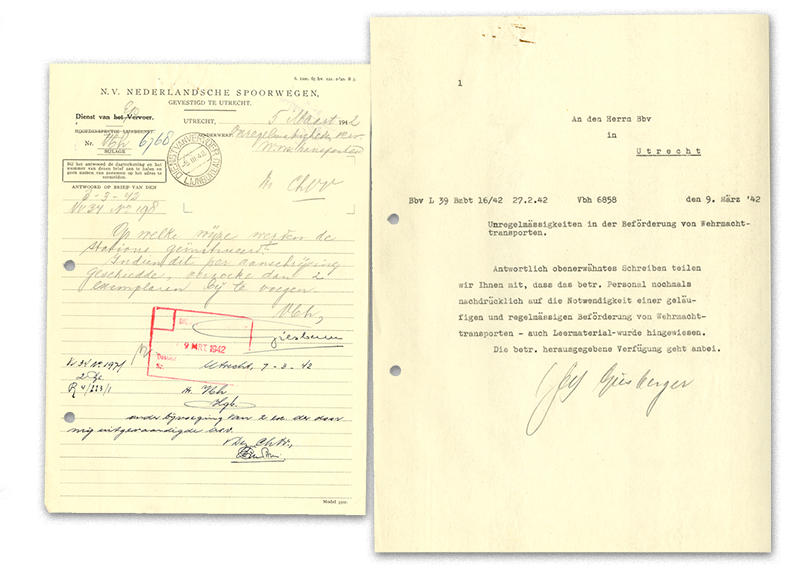
Irregularities
Correspondence on delays in transport operations for the Wehrmacht, 3 March 1942, Correspondence between NS and the Bahnbevollmächtigte, HUA 1867, Box 402.
All transports carried out on behalf of the Wehrmacht had priority over regular train traffic. This explains why the German authorities were inclined to interpret minor delays or irregularities as signs of sabotage. This generated a great deal of correspondence, with NS instructing its employees to take maximum care with special Wehrmacht transports.
POW transports
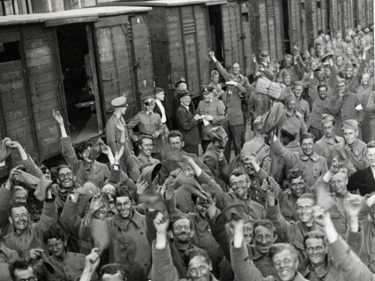
Home Sweet Home
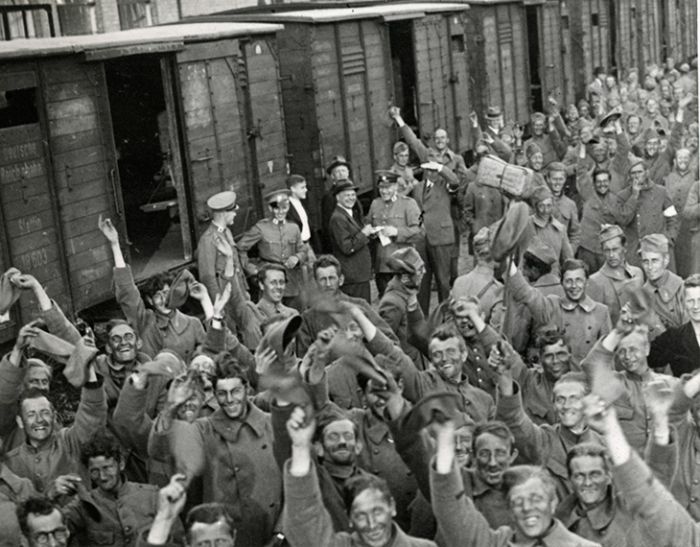
Home Sweet Home
Photograph of POWs at Zevenaar railway station after their return from Germany, © Spaarnestad Photo, 9 June 1940, photographer unknown. All rights reserved.
Immediately after the capitulation of the Dutch armed forces, approximately 20,000 Dutch soldiers were sent to Germany as POWs. As a gesture of goodwill towards the Dutch people, they were released soon after, in June 1940. This group of Dutch soldiers, evidently in high spirits, was photographed at Zevenaar railway station on 9 June.
POW transport

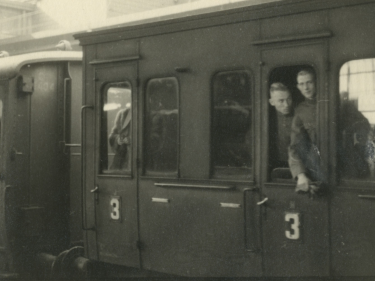
POW transport
Photograph of Dutch soldiers obeying the command to be taken as prisoners of war once again, 1943. Photo: K.F.H. Bönnekamp, Resistance Museum Collection.
On 29 April 1943, the Germans announced that they were going to send a substantial number of Dutch conscripts on forced labour to Germany as POWs after all. This decision provoked widespread protest, with people coming out on strike all across the country. In response, the Germans mounted a massive crackdown. Eventually around 10,000 men from this group were sent on forced labour. Many managed to avoid being sent to Germany by securing an exemption; others went in hiding. The photograph shows a transport of Dutch POWs to Germany in a third-class carriage.
NS and the Arbeitseinsatz
Numbers of extra trains
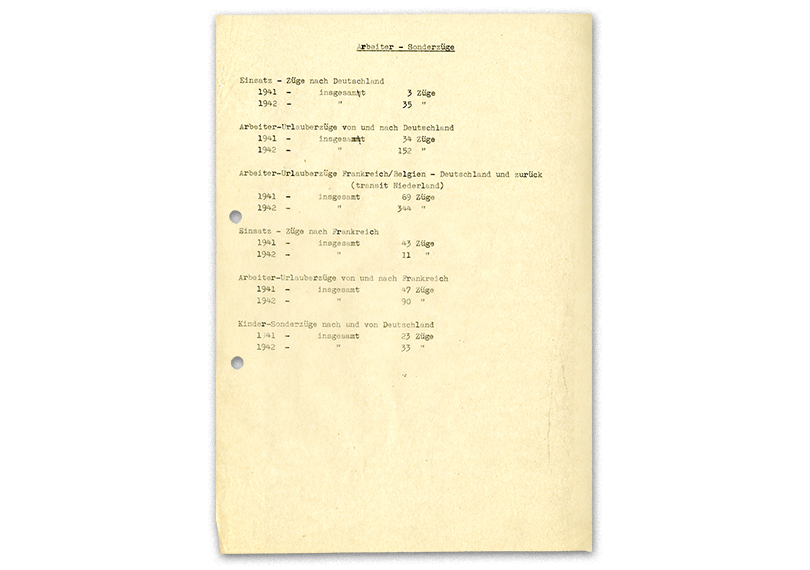
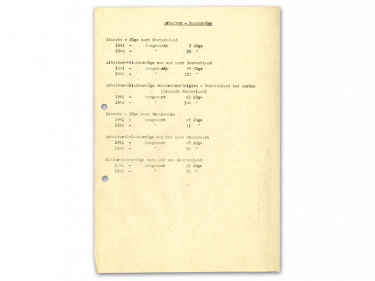
Numbers of extra trains
Document of the NS management board dated 9 January 1942 on the number of extra trains, Correspondence between NS and the German Bahnbevollmächtigte, HUA 1867, File 26/1.
In late 1942, the Germans instructed NS to prepare an overview of the numbers of workers who had been sent to Germany, France or Belgium on forced labour in extra trains. The overview also included the number of trains carrying workers on special leave. The Kinder-Sonderzüge were extra trains that the ‘Nederlandsche Volksdienst’ had arranged for the purpose of transporting hundreds of children from NSB and pro-German families to holiday addresses in the Ostmark (Austria) and Southern Germany.
Volunteers
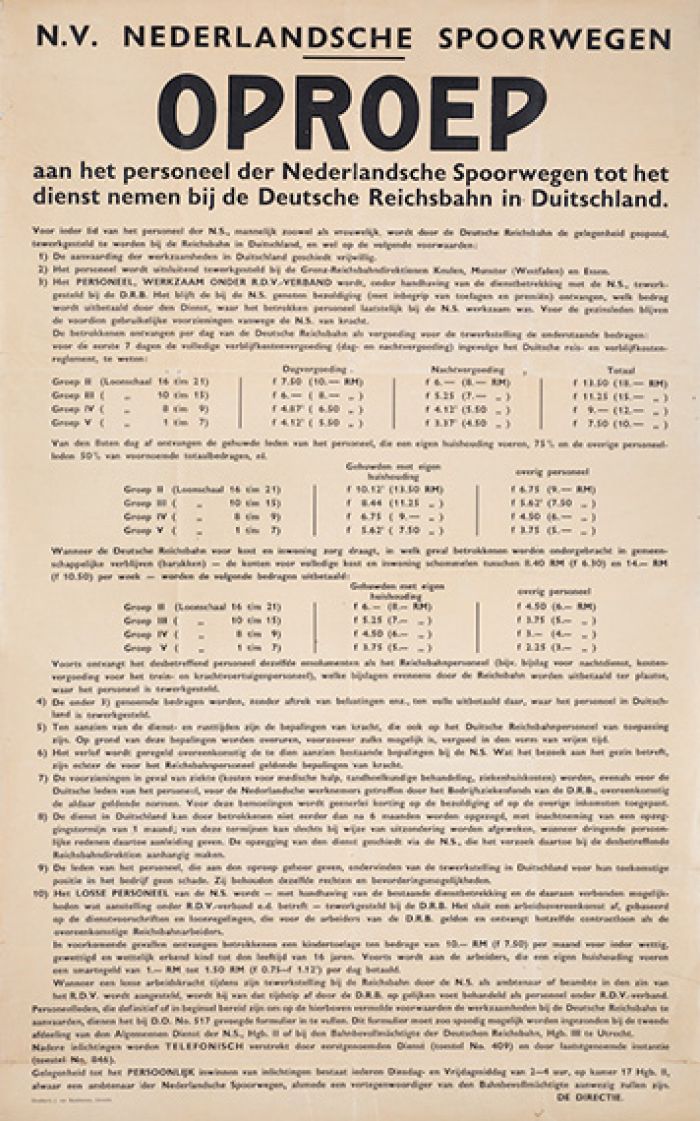
Volunteers
Poster calling on volunteers to register for employment with the German railways, date 1 April 1942, Railway Museum Collection.
In April 1942, all NS employees were requested to volunteer for employment with the German railways. Their terms of employment would remain unchanged, and they would be employed at their most recent salary. The German railways also paid an accommodation and travel allowance on top of the workers’ regular wage. The call had very little effect, as only a very small number of volunteers registered.
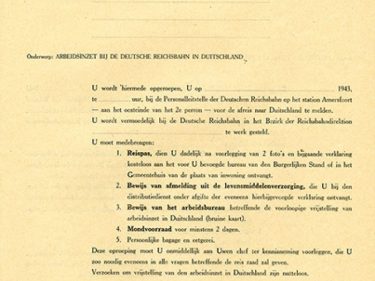
Summons
Summons
Summons for forced labour with the German railways, Railway Museum Collection.
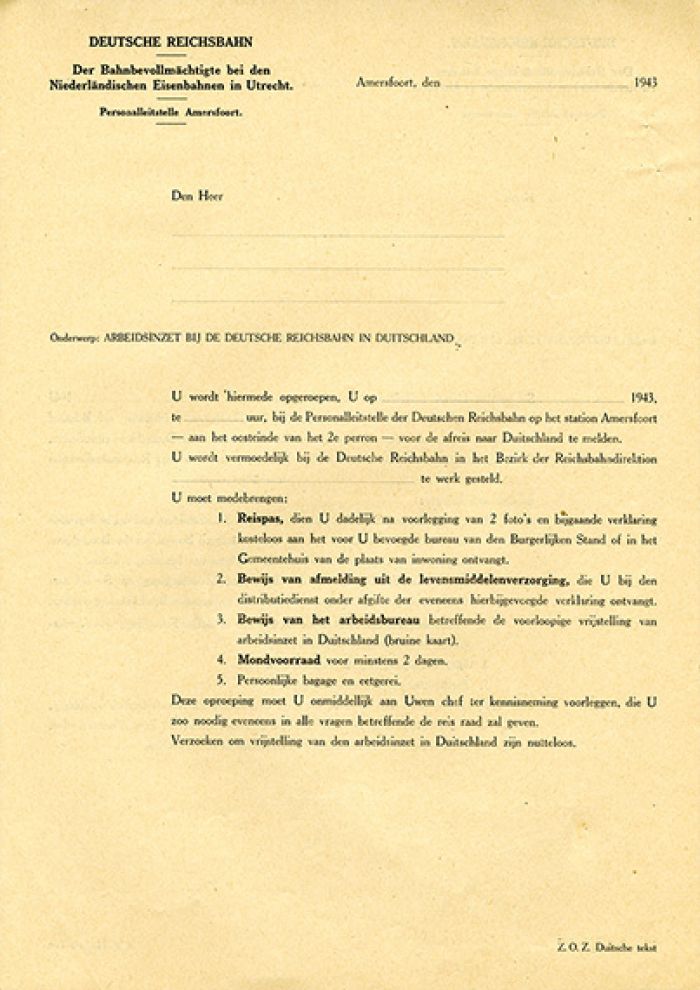
NS employees selected for forced employment with the German railways received a summons in 1943, stating that they should report at Amersfoort railway station and specifying the items they should bring: a travel card, a statement of deregistration from food provisioning, an employment office certificate, provisions for at least two days, a plate and cutlery and personal baggage. The employees were also informed that requests for exemption would not be considered.
Student transport
Student transport
Photograph of students sent on forced labour to Germany, Resistance Museum, Amsterdam.
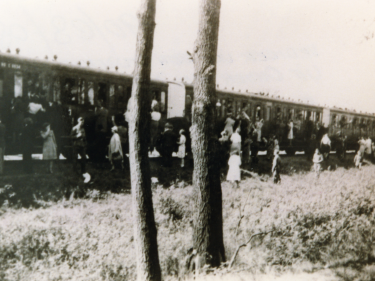
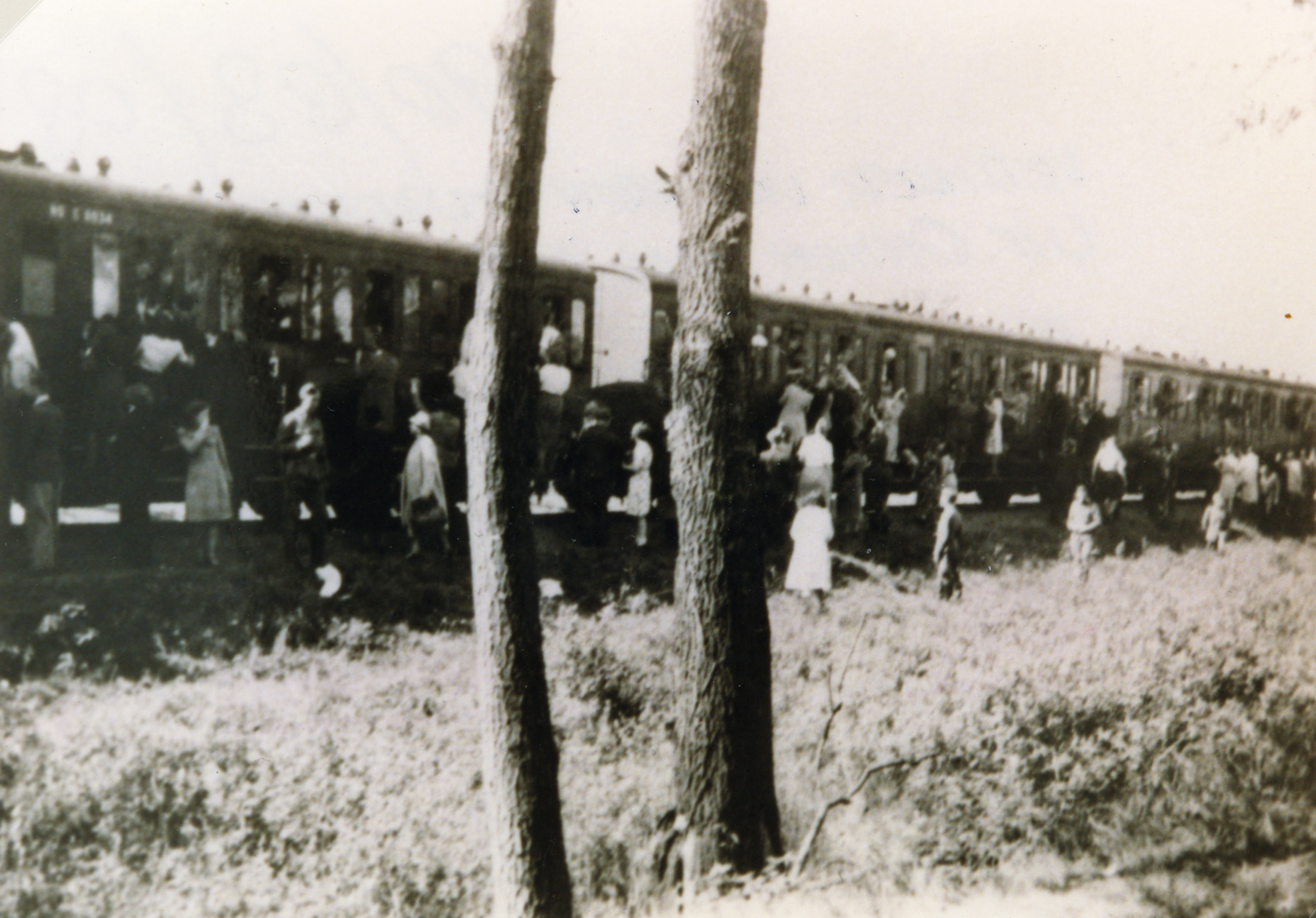
In May 1943, a train with Dutch students who had been sent to Germany on forced labour departed from the railroad embankment near Ommen. NS deployed third-class carriages for this purpose.
On to Germany
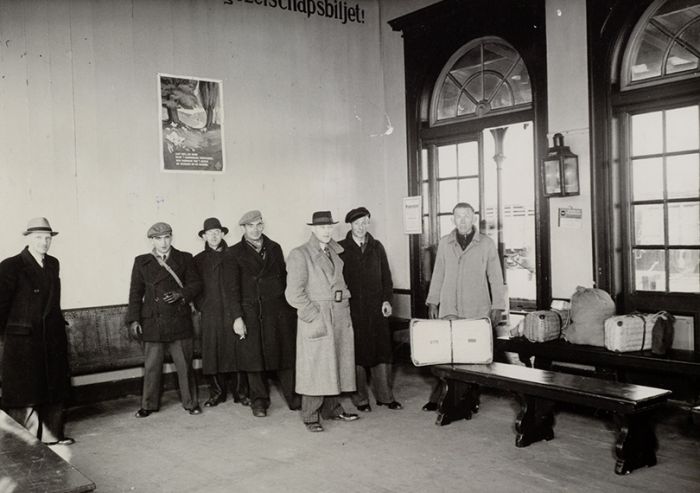
On to Germany
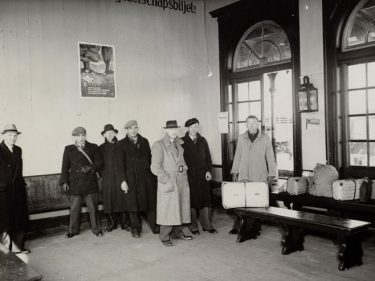
Photograph of workers’ waiting room at Steenwijk railway station, 1941, Railway Museum Collection.
The photo shows several men in woollen overcoats, with suitcases and bags, waiting for their train in the workers’ waiting room at Steenwijk railway station. According to the caption on the back, these men were being sent to Germany as part of the Arbeitseinsatz.
Female employees

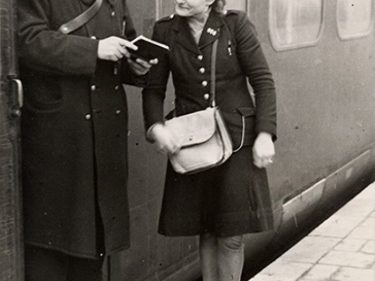
Female employees
Photograph of female guard, 1944, Railway Museum Collection.
The first female guards appeared on Dutch trains in the Second World War. NS’s decision to employ women in positions predominantly held by men in those days had little to do with the staff shortage, but was encouraged rather by the Germans’ urgent requests in several Arbeitseinsatz meetings to employ women, thus enabling part of the male workforce at NS to be deployed at the German railways. The photograph of this female guard was taken in 1944. After the war, the practice of employing women as guards was abandoned, only to reappear in the 1970s.
German train ticket

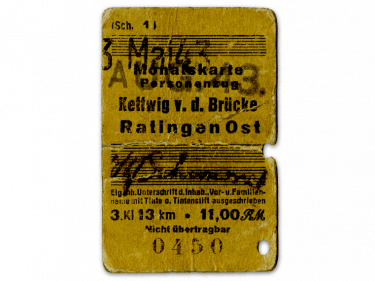
German train ticket
German train ticket dated 3 May 1943, Railway Museum Collection.
H.J. Schimmel was employed as a road mender and signalman in Deventer. In 1943 he was sent to Kettwig vor der Brücke in the Ruhrgebiet, where he performed household tasks. To travel to his German accommodation in Ratingen Ost, he used a third-class monthly season ticket. In late 1944, Schimmel received permission to travel to the Netherlands on leave. He never returned to Germany.
On medical advice
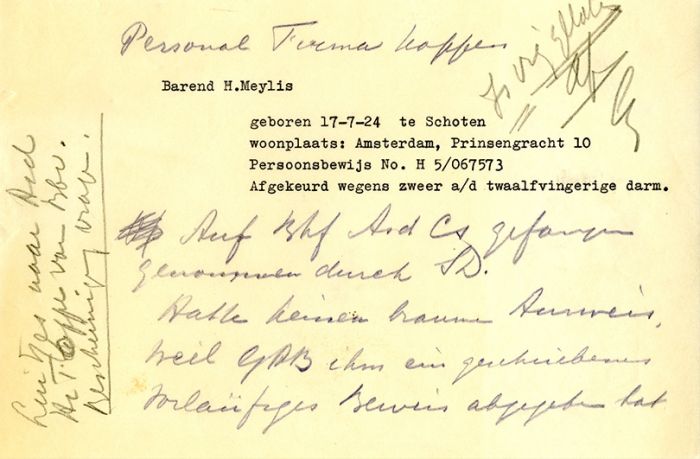
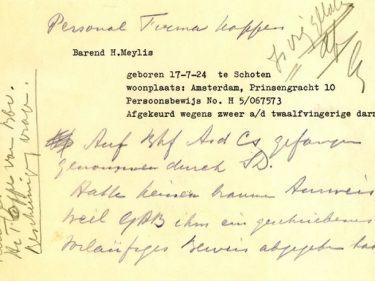
On medical advice
Letter from the correspondence between NS and the German Bahnbevollmächtigte, HUA 1867, File 81b.
Barend H. Meylis had been certified medically unfit owing to a ‘duodenal ulcer’. This enabled him to demonstrate that he was unfit for work in Germany. The hand-written note and the comments in the margin reveal that he had been arrested by the Sicherheitsdienst (SD) at Amsterdam Central Station because he did not carry a valid ID, although he could produce a provisional certificate. The comment in the top-right corner shows that he was subsequently released.
Arnold van Herk
Arnold van Herk
Audio fragment of Arnold van Herk, 2015, Railway Museum Collection.
Arnold van Herk entered the employment of NS at the beginning of the war. He started out as a trainee clerk at the travel agency at Hollands Spoor station in The Hague. In October 1943 he was summoned for forced labour and sent to Germany via Amersfoort. He stayed in Germany until he managed to escape to Holland in March 1945. In this audio fragment, Arnold tells about the period of his labour in Germany.
Deportations of Jews, Roma and Sinti
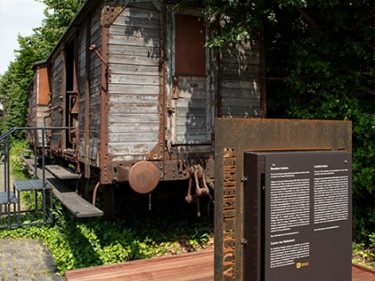
Loaded trains

Loaded trains
Baggage car NS 4088, built at Werkspoor in Amsterdam in 1914, Railway Museum Collection.
In the Railway Museum grounds visitors can view baggage car 4088, built at the Werkspoor manufacturing company on behalf of Staatsspoorwegen (the Dutch governmental railway company). During the Second World War, the Germans requisitioned the car and used it for unknown purposes. It was not until 2002 that it was recovered, from a remote station yard in Romania. Baggage cars of this type were also used for deporting Jews, Roma and Sinti from the Westerbork transit camp to the German border at Nieuweschans. Until mid 1943, the deportations were carried out using third-class passenger carriages, but later these were mostly replaced by close freight carriages or, occasionally, baggage cars. During the period of the mobilisation and the occupation, NS also used closed freight carriages to transport soldiers and horses; hence the frequent reference to ‘cattle cars’. Since 2013, this baggage car has been part of a special exhibition about the role of the railways in the deportation of Jews, Roma and Sinti, entitled ‘Loaded Trains’. For more information, visit www.beladentreinen.nl
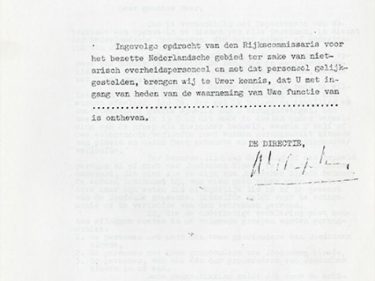
Letter of dismissal
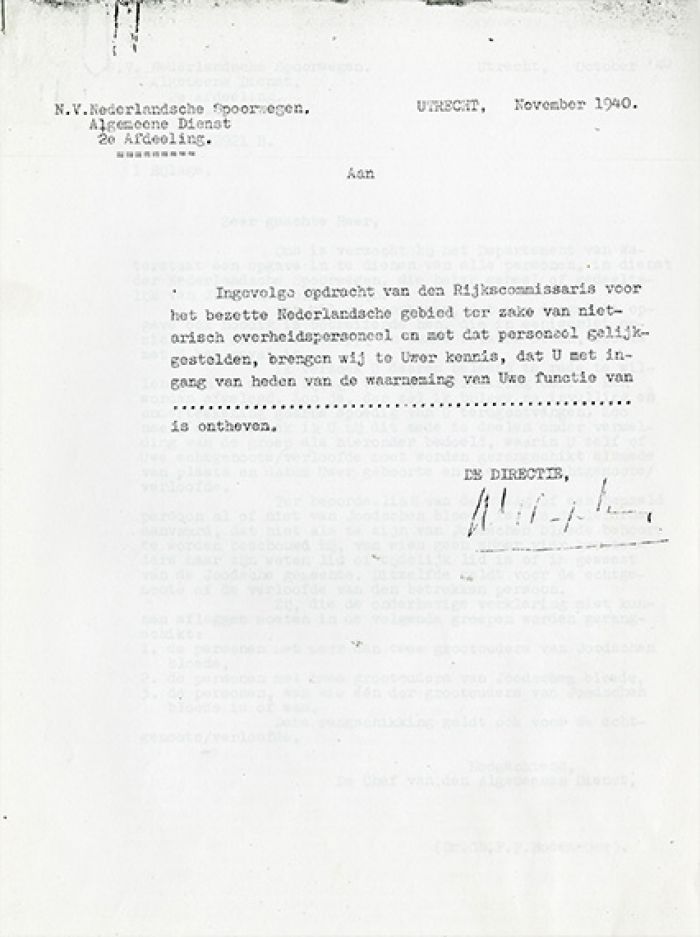
Letter of dismissal
Letter confirming the dismissal of Jewish NS employees, Railway Museum Collection.
On 21 November 1940, the German occupying forces ruled that all Dutch citizens of Jewish extraction in government service were to be dismissed. NS was not a state-owned company so its employees were not civil servants, but even so NS was considered to be a semi-governmental organisation. Hence, Reich Commissioner Seyss-Inquart ordered the railway company to dismiss all Jewish employees, and it did so without protest.
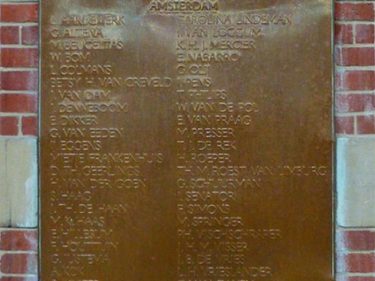
Jewish NS employees
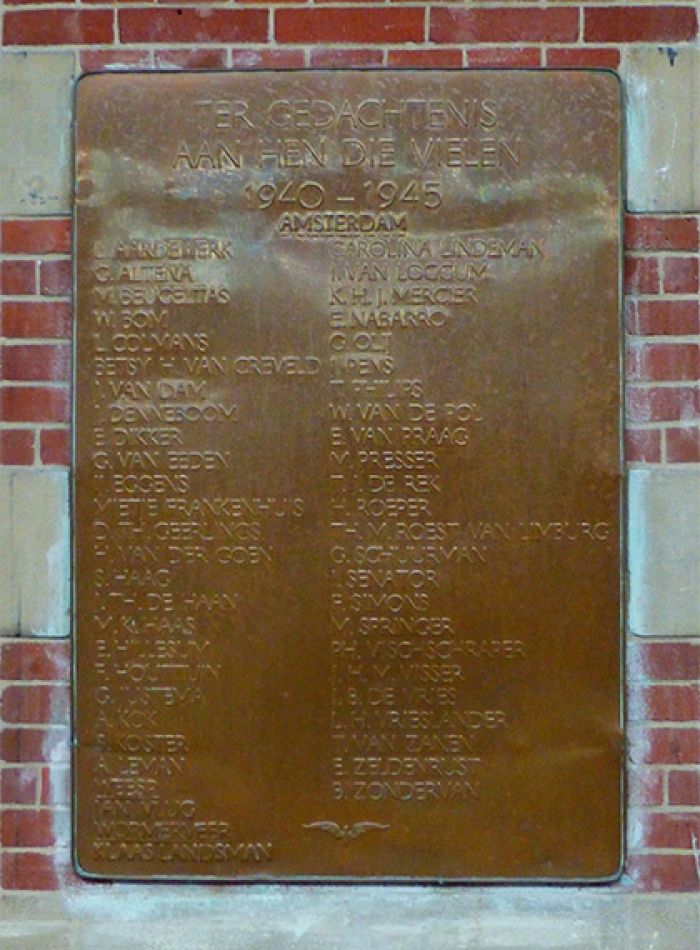
Jewish NS employees
Photograph of a plaque at Amsterdam Central Station, ‘Aan hen die vielen’ [To those who fell] website, Victor Lansink.
The plaque commemorating the 51 NS employees who died at Amsterdam Central Station includes 29 names of Jewish railway employees, who were deported from 1942 onwards and killed in concentration camps. By the time of their deportation they no longer worked at NS; all 87 Jewish railway employees had already been dismissed on 23 November 1940 by order of the German occupying forces. These people had worked at Amsterdam Central Station in a range of positions: engine drivers, shunters, loco cleaners and desk clerks. For more information about these victims, visit the website ‘Aan hen die vielen’: https://aanhendievielen.wordpress.com/
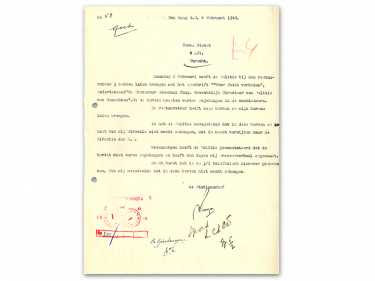
Jews not admitted
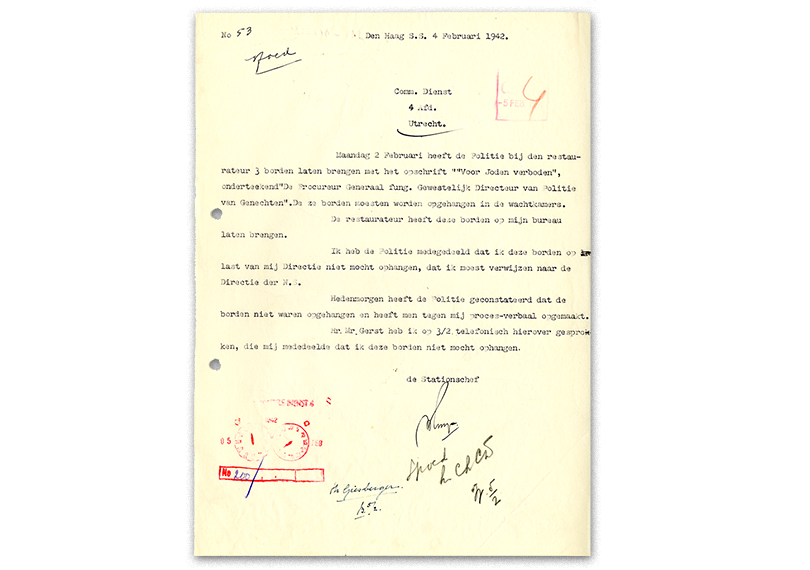
Jews not admitted
Correspondence about the ‘Jews not admitted’ sign, correspondence between NS and the German Bahnbevollmäcthtigte, HUA 1867, File 80/4.
In the course of 1941, the Germans took more and more measures to ban Jews from public life. Signs with the text ‘Jews not admitted’ appeared everywhere, also in the waiting rooms and buffets at NS railway stations. At Almelo station, the buffet manager and the station master refused to display these signs, on the grounds that the NS management board did not allow them to do so. This brought them into conflict with a German Ortsgrüppenleiter [local branch manager] and NSB representatives. On 19 February, following extensive correspondence between NS and the German authorities, Gustav Giesberger let it be known that he ‘had the honour’ of announcing that the signs should indeed be displayed.
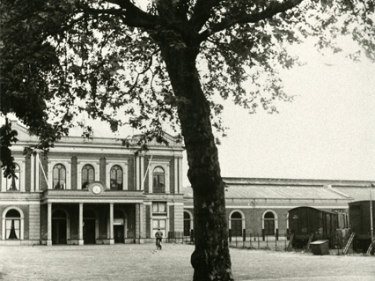
The Maliebaan Station
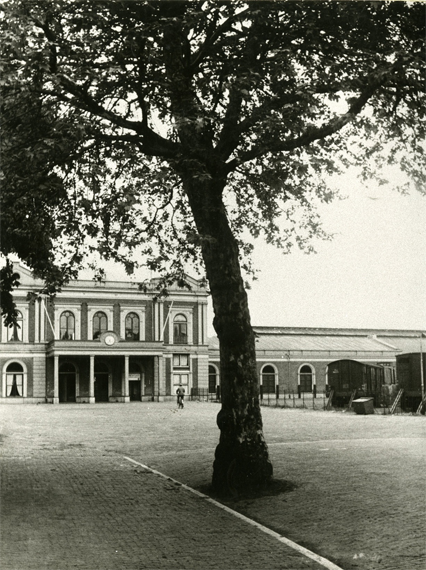
The Maliebaan Station
Photograph of the Maliebaan Station of 1941, Railway Museum Collection.
The Maliebaan Station was built in 1874 and has been home to the Dutch Railway Museum since 1953. During the war this station was operated by the Germans. They organized serval military transports from the station to Germany. In two big train transports in August 1942, hundreds of Jews of the city of Utrecht were transported from the Maliebaan Station to Westerbork. The first large transport of Jews from Utrecht took place on 18 August 1942. That day hundreds of Jewish families reported to the Maliebaan Station after having been called up. On August 25th a second group of mainly elderly Jews was transported from the Maliebaan Station to Westerbork. Since 2015 there is an impressive monument near the museum. It contains the names of all 1239 Jews of the city of Utrecht who were murdered in concentration camps.
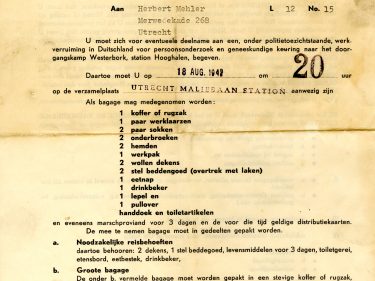
Summons
Summons
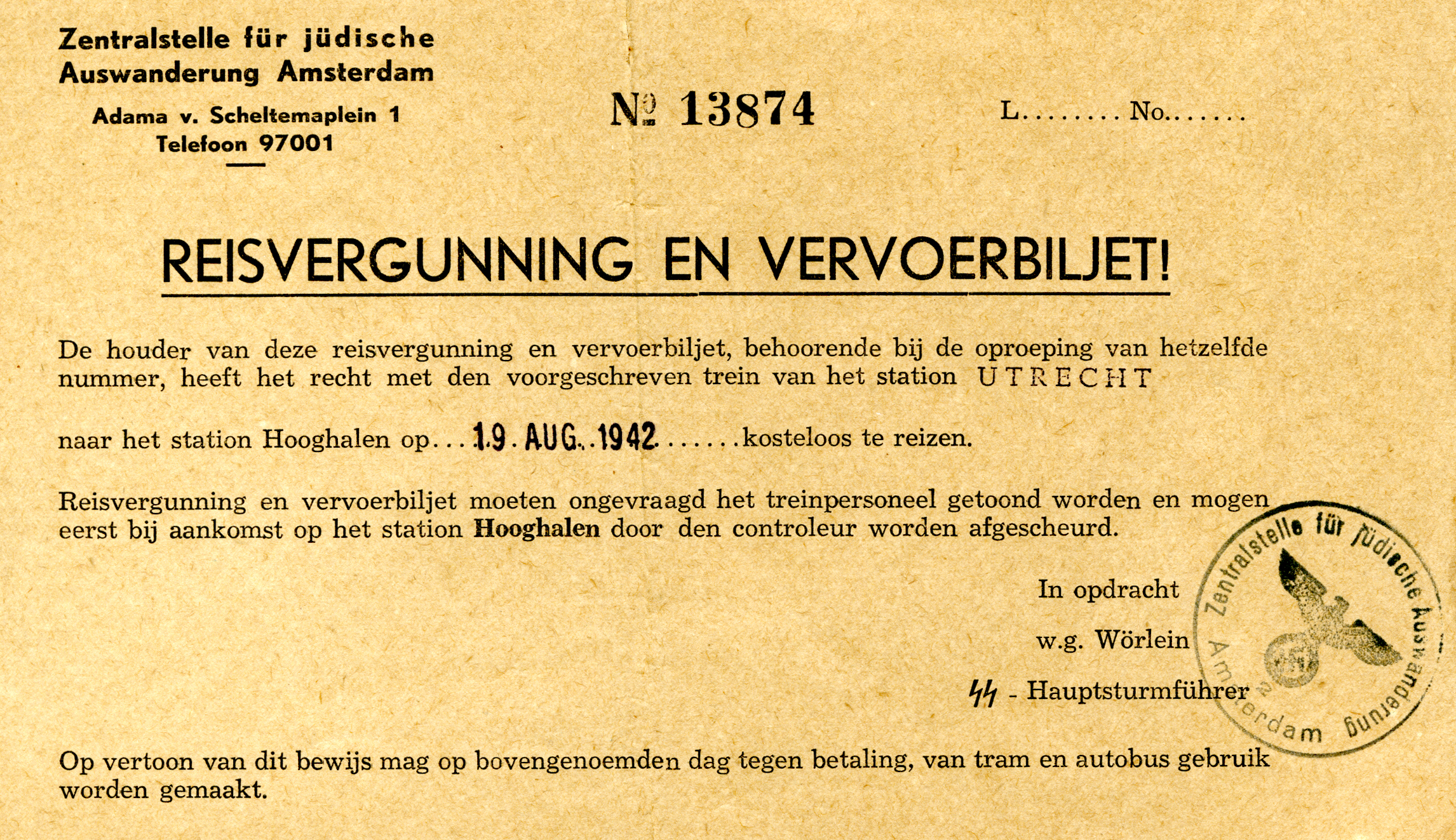
Summons with travel permit and train ticket of Herbert Meijer (misspelled as ‘Herbert Mehler’), 1942, Private Collection.
Herbert Meijer (1916-1974) was born in Bandung in the former Dutch East Indies as one of the sons of the German-Jewish couple Arthur Meijer and Helene Cohen. His father served in the Royal Netherlands East Indies Army (KNIL). After his retirement, the family Meijer moved to Heppenheim in Germany, but due to the anti-Jewish measures they decided to leave for The Hague in Holland. During the German occupation Herbert and his parents moved to Utrecht, where he married with the non-Jewish Liefdina Luursema (nickname Lidi) in 1942. Not much later he received a summons to report at Maliebaan station in Utrecht, the current location of the Railway Museum, in the context of the ‘eastward employment program’. The letter included a list of luggage items he should and shouldn’t bring. With this he required to submit a detailed statement of his assets and debts to F. Lippman, Rosenthal & Co, a bank specially created during the occupation for the registration and confiscation of Jewish possessions. The letter contained also a travel permit and a train ticket that allowed Herbert Meijer to travel to Hooghalen (camp Westerbork) free of charge. However, NS did send the bills for these transports tot he SS; after the war, it emerged that these were paid out of Jewish bank deposits plundered by the Germans. Herbert Meijer decided not to obey the summons, went into hiding and survived the war. His parents and brother were deported to Westerbork and were murdered in Auschwitz and Sobibor. More than 80 years later, the summons was found in the house were Herbert Meijer was hiding during the war.
Construction of railway line to Westerbork

Construction of railway line to Westerbork
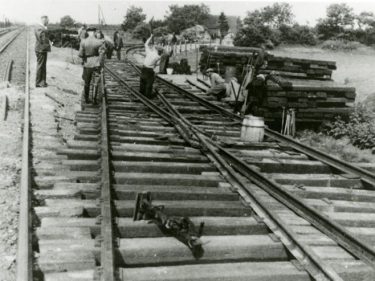
Photographs of the construction of the railway line between Hooghalen and the Westerbork transit camp, August 1942, from the album of camp commander Albert Konrad Gemmeker, Yad Vashem Collection.
The first deportation trains to Eastern Europe departed from Hooghalen station – some five kilometres from the Westerbork transit camp – on 15 July 1942. The Jews had to walk all the way to Hooghalen, with all their baggage. The Germans had ordered NS to build a temporary railway line from Westerbork to Hooghalen as soon as possible. The line was built by Jewish prisoners from Westerbork. The idea was that it would be dismantled only a year later, as the Germans expected that all Jews would have been removed from the Netherlands by that time. However, the Westerbork-Hooghalen line remained in use until 13 September 1944, the date of the last transport. This was four days before NS employees downed tools as part of the railway strike that had been called by the Dutch government in exile.
Timetable
Timetable
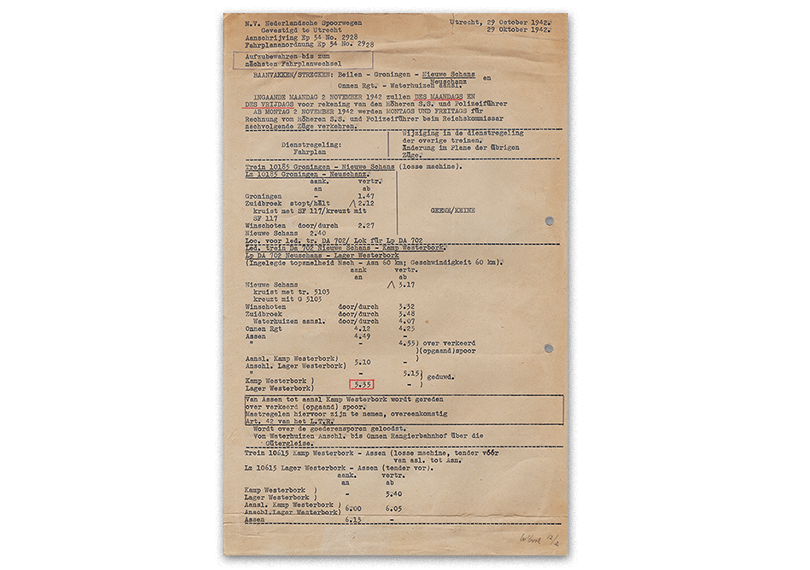
Timetable for services between Westerbork and Nieuwe Schans, 29 October 1942, NIOD collection.
Once the railway line from the Westerbork transit camp to Hooghalen was completed, in October 1942, the Operation department of Gustav Giesberger presented a new timetable for transports from Westerbork to the German border at Nieuweschans. At that location, the deportation train was uncoupled from the Dutch locomotive and taken over by a German engine. NS sent the bills for its deportation services to the Höheren SS und Polizeiführer beim Reichskommissar [senior SS and police supervisor at the Reich Commissioner’s Office]. This was the most senior SS official in the country.
Numbers of transport operations
Numbers of transport operations
Overview of deportation transports of Jews in 1942, correspondence between NS and the German Bahnbevollmächtigte, HUA 1867, File 26/1.
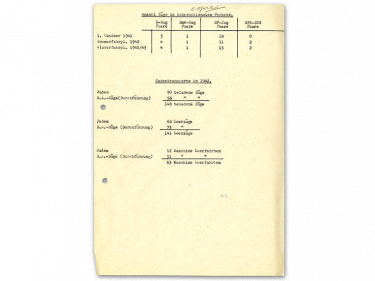
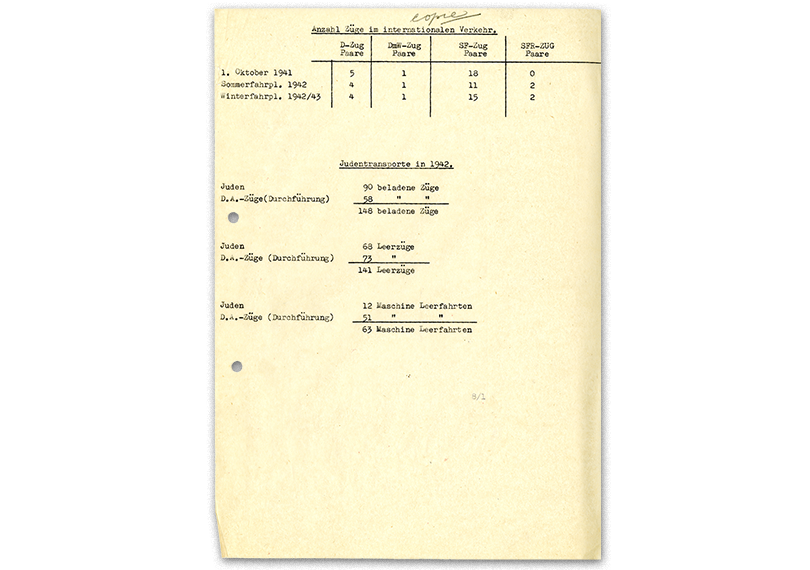
In early 1943, NS was ordered to produce an overview of the numbers of extra trains used for the deportation of Jews. The overview shows that NS used 148 trains for this purpose in 1942 alone: 90 to Westerbork and 58 for further transport to the East. NS also listed the numbers of trains and locomotives that returned ‘empty’. It is not known how many trains NS operated between the various railway stations in the Netherlands and Westerbork. We do know however that a total of 102 deportation trains drove to the death camps in Eastern Europe. Most came from Westerbork, but there were also some trains from Amsterdam and the concentration camp in Vught.
Extra Trains department
Extra Trains department
Report by J.C.N. Schrijver about the NS Operations department, 1943, Railway Museum Collection.
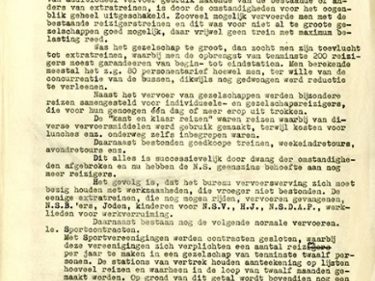
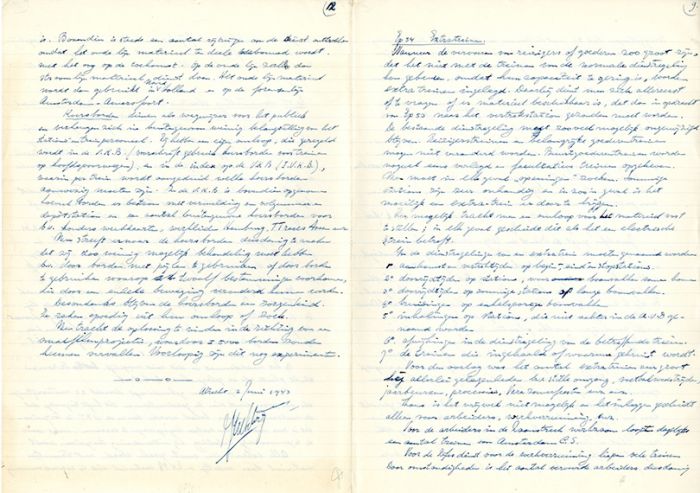
In 1943, an expert named J.C.N. Schrijver produced an overview of all tasks performed by the NS Operations department, which was led by Gustav Giesberger at the time. According to Schrijver, the extra trains deployed before the war were used mostly for group trips and outings. However, by 1943 extra trains were only used for ‘transporting prisoners, NSB members, Jews (…) and workers in the context of the eastward employment programme’. The sub-department of Operations (EP54) was responsible for the deployment of extra trains, and sub-department EP53 arranged the required rolling stock.
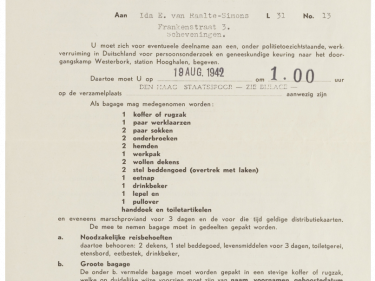
Travel permit
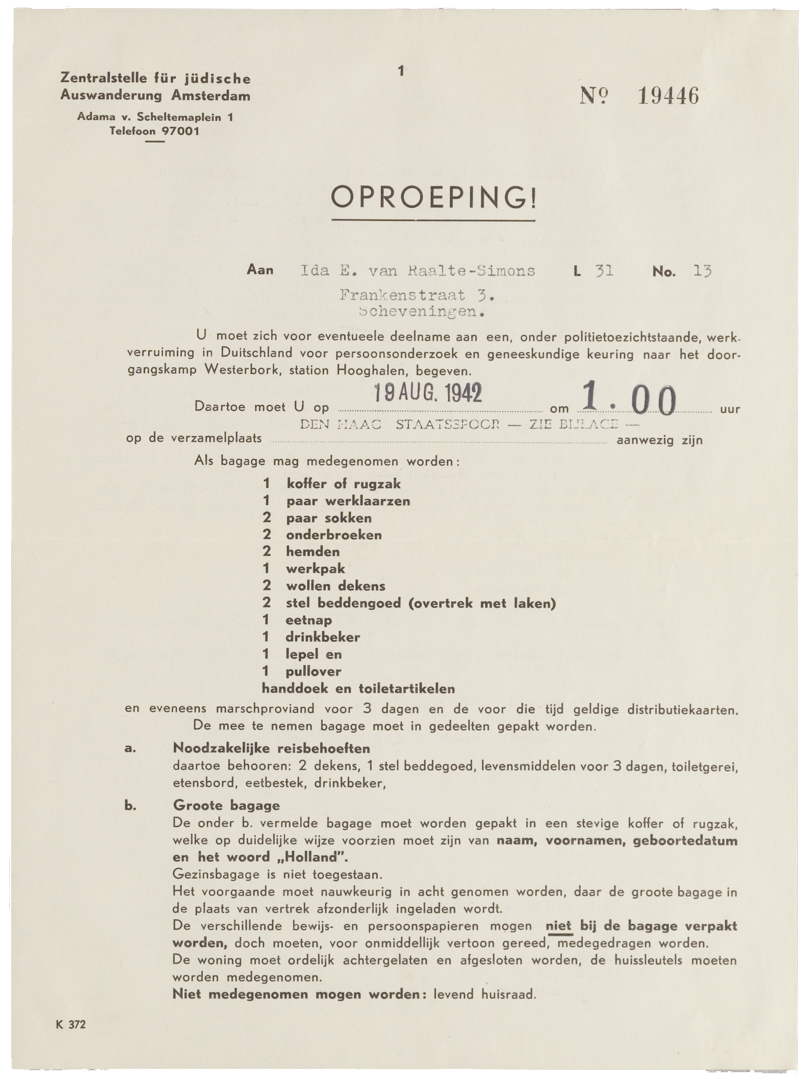
Travel permit
Summons with travel permit and train ticket of Ida and Ernst van Raalte, Jewish Historical Museum Collection.
Artist and Zionist Ida van Raalte-Simons (1895-1987) was married to journalist and lawyer Ernst van Raalte (1892-1975). They had five children and lived in Scheveningen. As Jewish citizens of the Netherlands, in August 1942 they received a summons from the ‘Zentralstelle für jüdische Auswanderung’ (Central Agency for Jewish Emigration) to report at Staatsspoor Station in The Hague for transport to transit camp Westerbork in the context of the ‘eastward employment programme’. The letter included a list of baggage items they should bring. They were also required to submit a detailed statement of their assets and debts to F. Lippman, Rosenthal & Co, a bank specially created during the occupation for the registration and confiscation of Jewish possessions. The letter also contained a travel permit and a train ticket that allowed them to travel to Hooghalen free of charge. However, NS did send the bills for these transports to the SS; after the war, it emerged that they were paid out of Jewish bank deposits plundered by the Germans. Ida and Ernst van Raalte decided not to obey the summons, went into hiding with their children and survived the war.
Destination Auschwitz
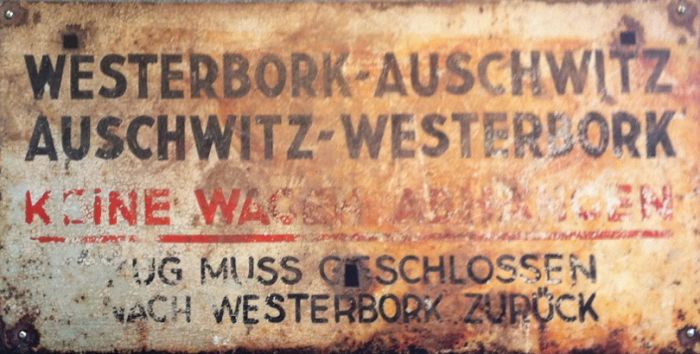
Destination Auschwitz
Destination board on trains travelling between Westerbork and Auschwitz, Camp Westerbork Museum collection.
The NS management board always maintained it was not aware of the final destination of the deportation trains. While it is certainly possible that the board members could not conceive of the ultimate purpose of these transports, the geographical destination of the trains was certainly known both to NS and to the Jewish prisoners in the Westerbork camp. Clear evidence of that is provided by the destination boards on the deportation trains, stating ‘Westerbork-Auschwitz’. One such board has survived and is now part of the collection of the Camp Westerbork Museum.
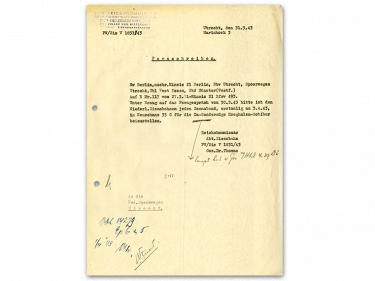
Sobibor
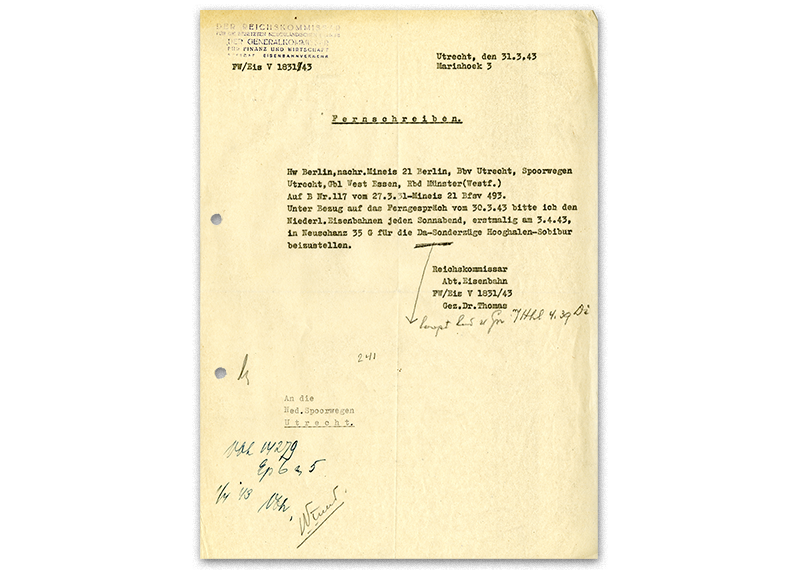
Sobibor
Document dated 31 March 1943, correspondence between NS and the German Bahnbevollmächtigte, in HUA 1867, File Bbv 1943-1944.
On 31 March 1943, NS received an order to prepare, every Sunday evening, a train comprising 35 freight carriages for transports from Hooghalen to Sobibor. The NS management board and several sub-departments of NS Operations must have been aware, therefore, that these extra trains travelled far into Poland. For these transports, which took three days, NS used bare goods carriages, equipped with no more than a barrel of water and another barrel serving as a latrine. With sixty to seventy people being crammed into a single carriage, conditions were so atrocious that some passengers died before reaching Sobibor.
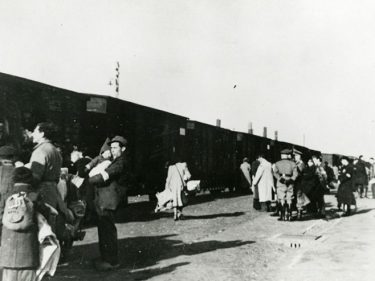
Transport of 19 May 1944
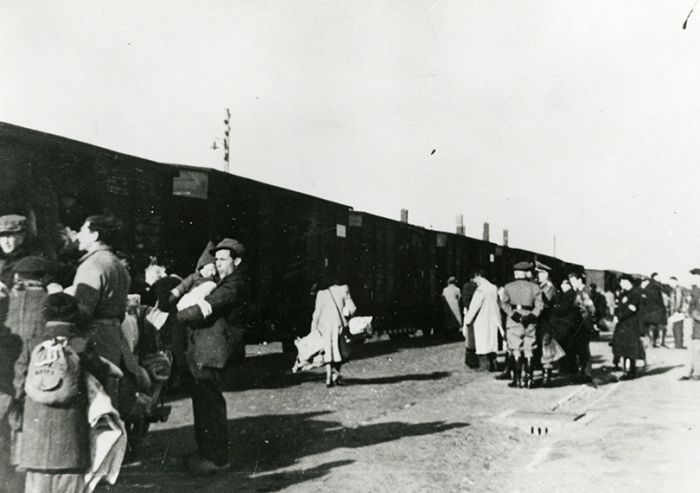
Transport of 19 May 1944
Still from a film by Werner Rudolf Breslauer, 1944, NIOD, Netherlands Institute for Sound and Vision.
In 1944, camp commander Albert Gemmeker of Westerbork ordered inmate and professional photographer Werner Rudolf Breslauer to make a film about daily life in Westerbork. Breslauer’s film included a scene of arriving and departing transports on 19 May 1944; this photograph is a still from that scene.
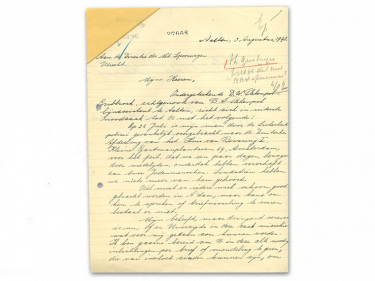
In hiding
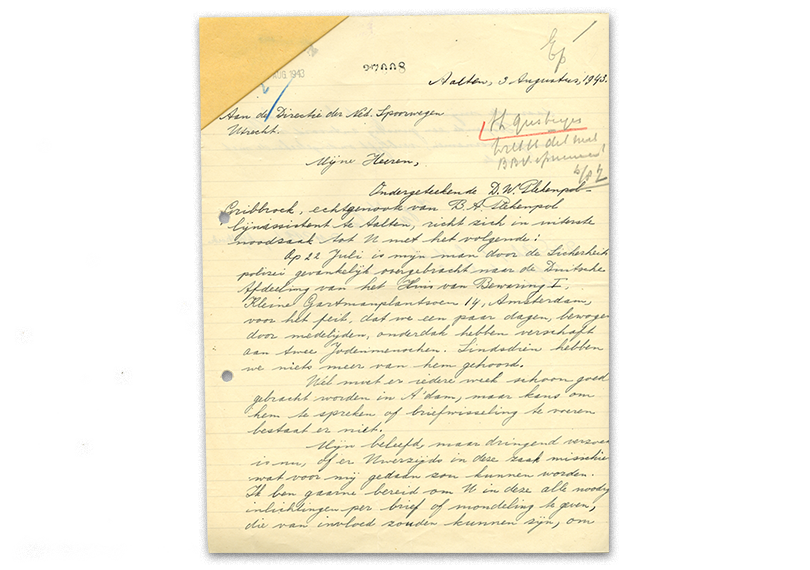
In hiding
Letters dated 3 and 27 August 1943, correspondence between NS and the German Bahnbevollmächtigte, HUA 1867, File 52/1.
On 3 August, Ms Plekenpol-Gribbroek, in utter distress, addressed a plea to the Head of Operations at NS, Gustav Giesberger. Her husband, a railroad assistant at NS in Aalten, had been arrested by the Sicherheitspolizei (SD) and fired following their decision to provide shelter, ‘out of compassion’, to two ‘Jewish people’ for a few days. On 27 August, Giesberger informed her that he had discussed the matter with the relevant Bahnbevollmächtigte, who had declared he was unable to help her seeing that her request concerned ‘a Jewish issue’.