Threat of war
In celebration of the 100th anniversary of the railways in the Netherlands, NS had planned to stage a major retrospective exhibition and a festive programme of shows, parades and speeches. However, the celebrations were overshadowed by the growing threat of war. The Dutch government hoped the country could stay neutral, as it had during the First World War. However, when Adolf Hitler concluded a non-aggression treaty with the Soviet Union, the risk of being dragged into a war with Nazi Germany became almost unavoidable. The Dutch government decided to proclaim a general mobilisation on 28 August 1939. The railways were requisitioned by the Dutch armed forces and placed under the command of the General Staff's Logistical Services. NS faced the challenge of transporting more than 150,000 soldiers, tens of thousands of horses and loads of military equipment in just a few days. The operation was quite successful; indeed, regular train services could resume not long after. At the same time, NS itself took precautions in case war broke out with Germany. For example, station masters were warned they might be asked to destroy trains and signal boxes to prevent the enemy getting hold of them, and employees were prepared for the use of gas masks. Despite these precautions NS, like the rest of the Netherlands, was taken by surprise when the Germans invaded the country on 10 May 1940.
One hundred years of railways
Traffic parade
Traffic parade
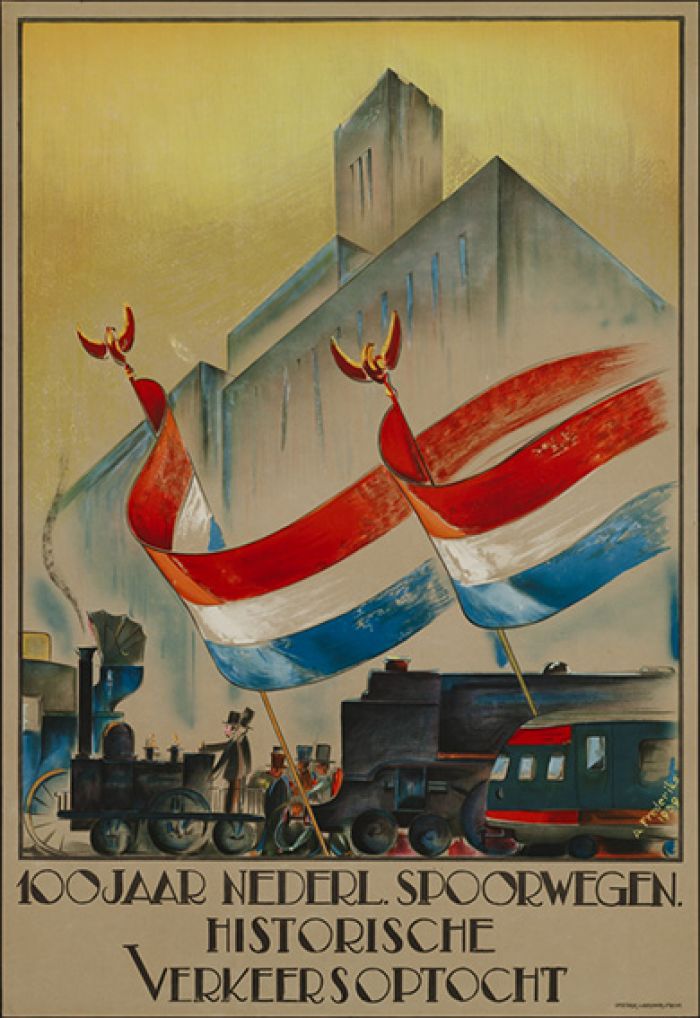
Poster by A. Frederiks, 1939, Railway Museum Collection.
To mark the 100th anniversary of the railways in the Netherlands. NS organised a parade through the streets of Utrecht on 7 October 1939. Thousands of visitors braved the rain to view the carefully wrought replicas of transport equipment, ranging from the model of a towing barge to a full-scale diesel train. Unfortunately, according to press reports the replica of De Arend got stuck in the sand and soon gave up.
Retrospective exhibition
Retrospective exhibition
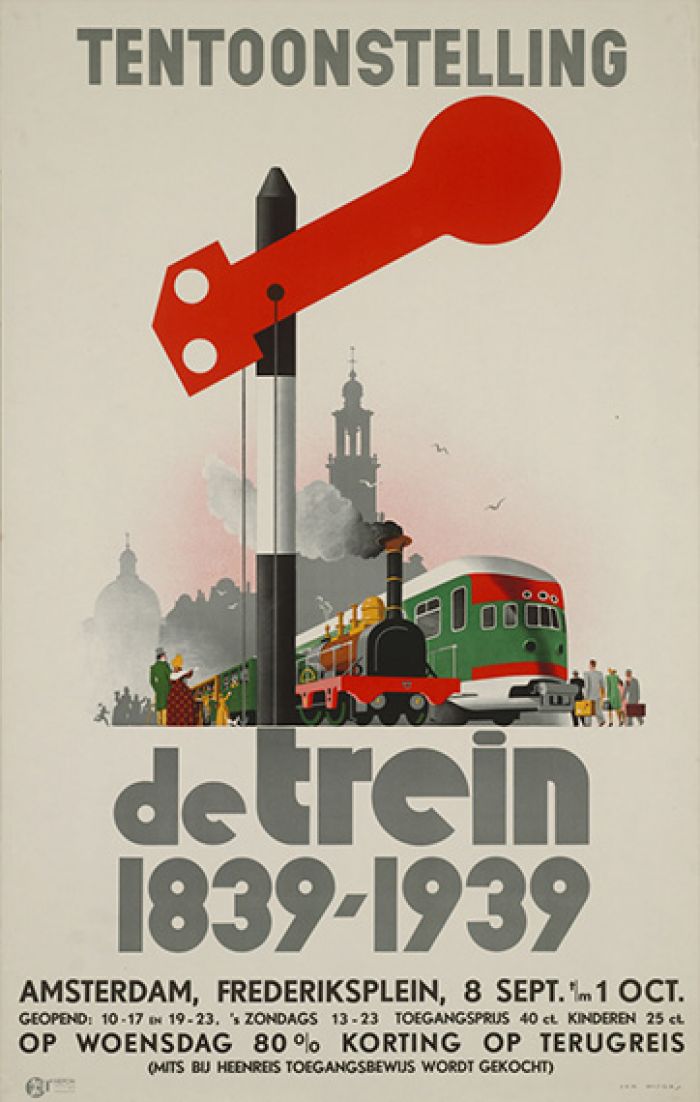
‘The train 1839-1939’, poster by Jan Wijga, 1939, Railway Museum Collection.
NS staged a large retrospective on one hundred years of railways in the Netherlands, on the site of the former Paleis voor Volksvlijt in Amsterdam, from 8 September to 1 October 1939. Graphic designer Jan Wijga designed a poster depicting the first steam locomotive in the Netherlands alongside a modern-day diesel-electric train. It took one hundred and sixty unemployed people from Amsterdam almost a year to build and fit out the exhibition.
Locomotive De Arend
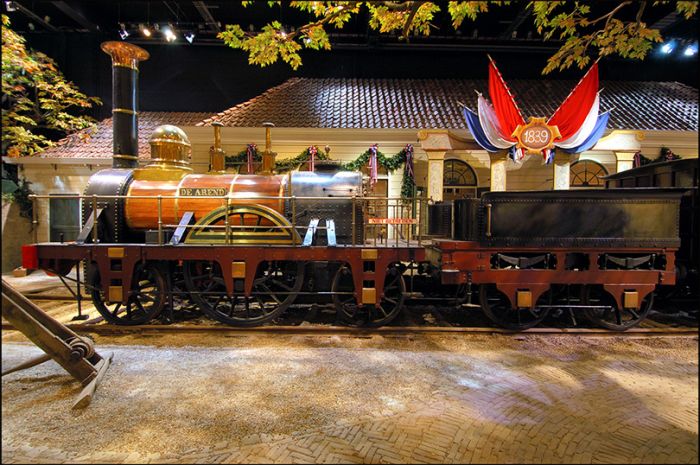
Locomotive De Arend
Working replica of steam locomotive De Arend (The Eagle) , built in 1938 by the Central Workshop in Zwolle, now on display in ‘The Great Discovery’ at the Railway Museum, Railway Museum Collection.
The highlight of the exhibition on the 100th anniversary of the railways in the Netherlands was the working replica of De Arend, which took visitors on trips around the site. The original locomotive from 1839 had already been demolished back in 1865, when the Netherlands switched to narrow-gauge railways. Fortunately, the design drawings had been preserved, allowing a replica to be built at the Central Workshop in Zwolle which, today, is one of the museum’s highlights.
De Arend in operation
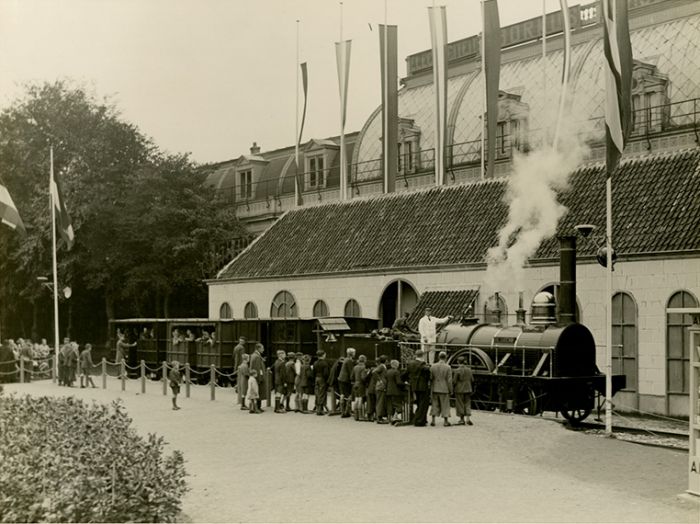
De Arend in operation
Photograph of the locomotive named De Arend (The Eagle) at the Amsterdam Paleis voor Volksvlijt, 1939, Railway Museum Collection.
The exhibition site near the Paleis voor Volksvlijt in Amsterdam boasted a short broad-gauge track, allowing visitors to tour the site in one of the carriages towed by De Arend.
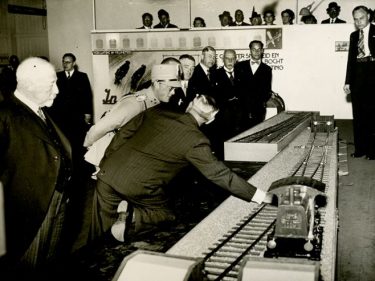
Prince Bernhard
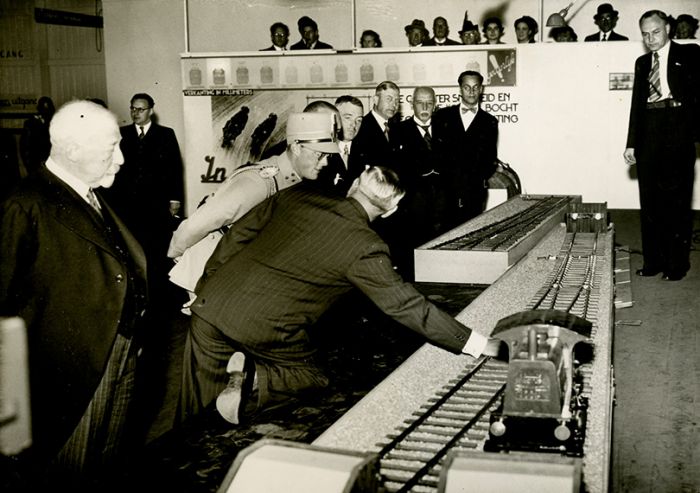
Prince Bernhard
Two photographs of Prince Bernhard visiting the centenary exhibition of the railways in the Netherlands, Railway Museum Collection.
On 21 September 1939, Prince Bernhard came to Amsterdam to visit the centenary exhibition of the railways in the Netherlands. Accompanied by scores of school children, the prince made a trip in the middle carriage behind steam locomotive De Arend. According to newspaper reports and the photo caption, the prince also showed a great interest in the scale models on display at the exhibition.
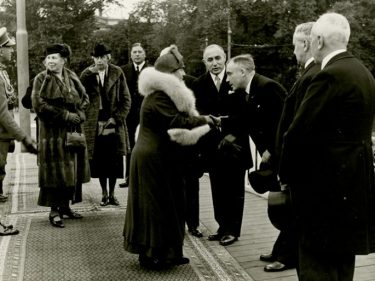
Queen Wilhelmina
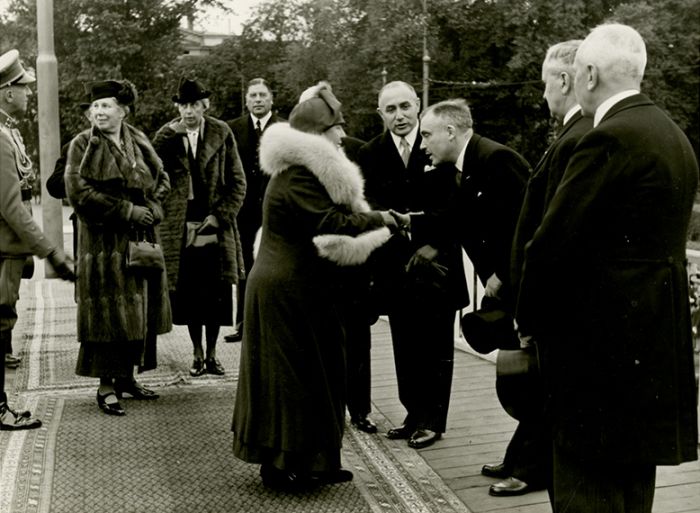
Queen Wilhelmina
Photograph of Queen Wilhelmina visiting the centenary exhibition of the railways in the Netherlands, Railway Museum Collection.
A few days after Prince Bernhard, on 30 September 1939 Queen Wilhelmina visited the centenary exhibition of the railways in the Netherlands. She was welcomed by the NS management board and the Mayor of Amsterdam, W. de Vlugt. The latter can be seen in the picture next to the queen, who is shaking hands with NS President Jan Goudriaan.
Wim Kan and Corry Vonk
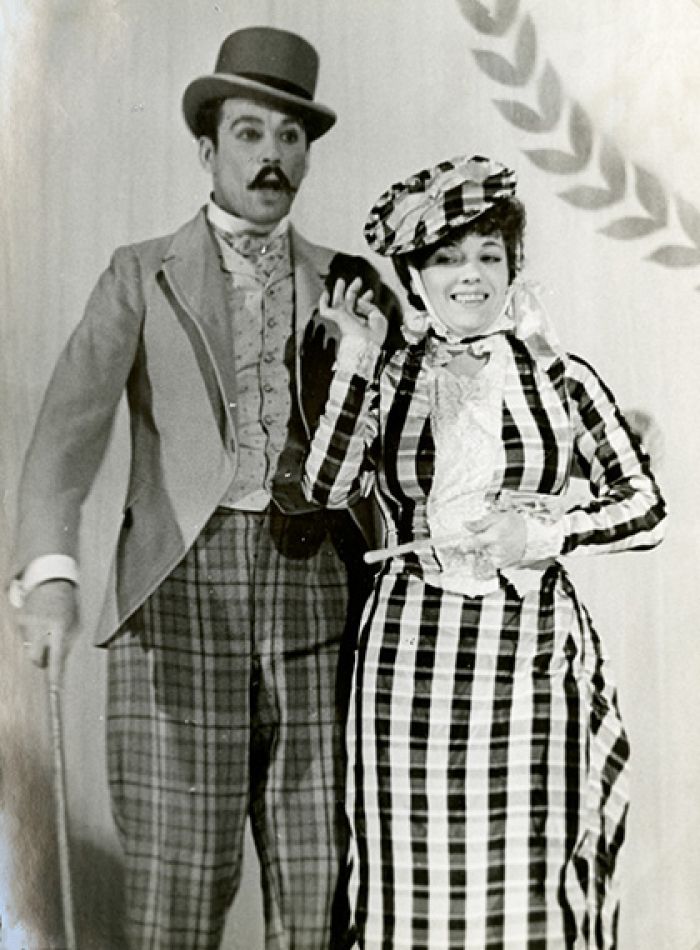
Wim Kan and Corry Vonk
Photograph of Wim Kan and Corry Vonk during one of their shows on the occasion of the centenary celebrations of the railways, 1939, Railway Museum Collection.
As part of the centenary celebrations, cabaret performers Wim Kan and Corry Vonk were to stage their show ‘From diligence to diesel’ for large audiences of NS employees. However, due to the disrupted timetable it was impossible for so many people to travel to Utrecht all at the same time. Instead of cancelling the show, it was decided to stage several performances in different parts of the country. ‘If the employees can’t come to see the revue, the revue will come to see the employees.’
Commemorative goblet
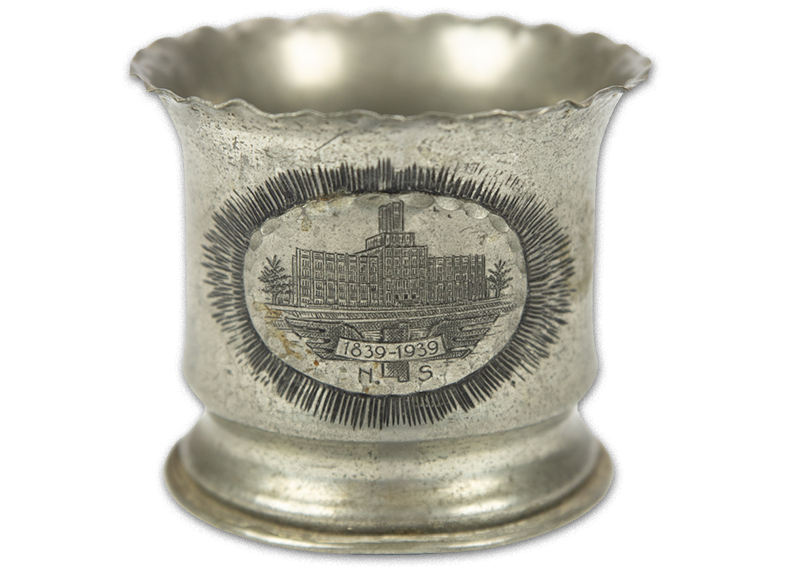
Commemorative goblet
Goblet to commemorate the 100th anniversary of the railways in the Netherlands, 1939, Railway Museum Collection.
A range of decorative mugs, plates and tiles were created to commemorate the 100th anniversary of the railways in the Netherlands, including a silver-coloured commemorative goblet, depicting the Main Administrative Building of NS in Utrecht. Also referred to as as HGB (Hoofdgebouw, or main building) III in the past, this structure is now commonly known as the ‘Inkpot’.
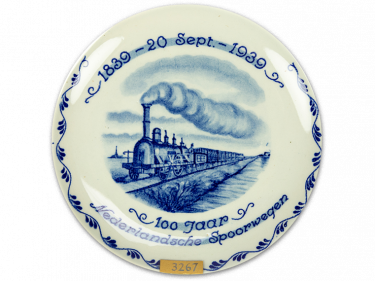
Decorative plate
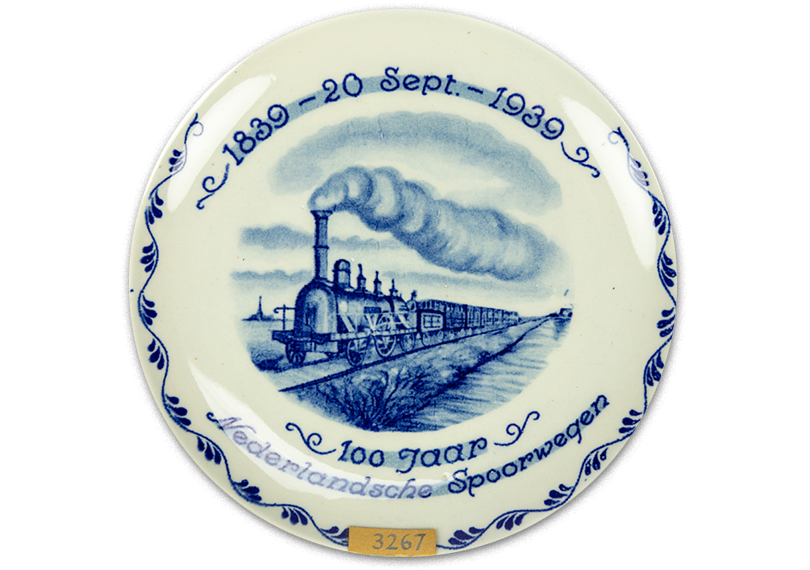
Decorative plate
Delft blue decorative plate to commemorative the 100th anniversary of the railways in the Netherlands, Railway Museum Collection.
A Delft blue commemorative plate depicts the maiden trip of the first train in the Netherlands. The artist emphasised the impressive plume of smoke emerging from steam locomotive De Arend.
Mobilisation
Officers take precedence
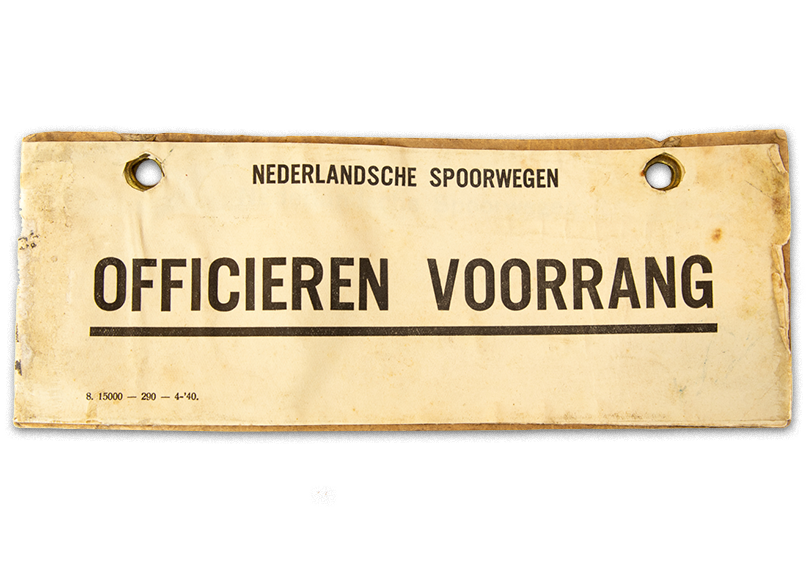
Officers take precedence
Carriage sign, 1939, Railway Museum Collection.
During the period of the mobilisation, which lasted until the German invasion on 10 May 1940, military transports took precedence over regular passenger transport. In addition to deploying special trains to transport soldiers, horses and equipment, NS also had to deal with the effects of the mobilisation in regular trains. For instance, in passenger compartments army officers had priority if there were not enough seats.
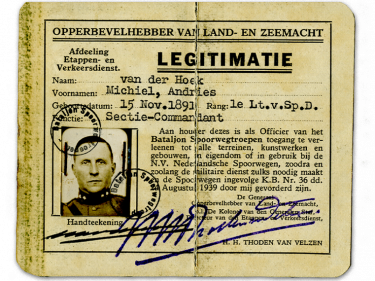
Proof of identity
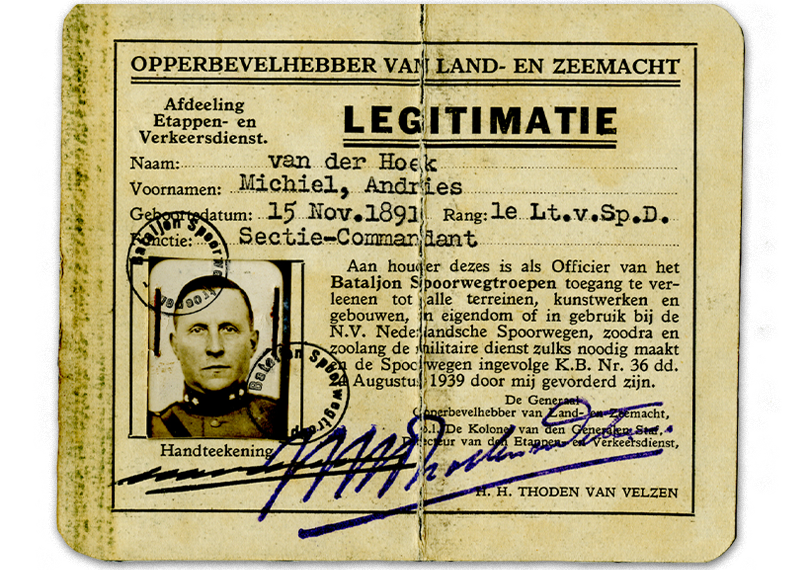
Proof of identity
Proof of identity, 1939, Railway Museum Collection.
Michiel Andries van der Hoek was squad leader and first lieutenant of the Railway Forces, which formed part of the Logistical Services. His proof of identity was issued by the Commander in Chief of the Army and the Navy. His passport photograph features a stamp with the text ‘Bataljon Spoorwegtroopers’ [railway troopers battalion].
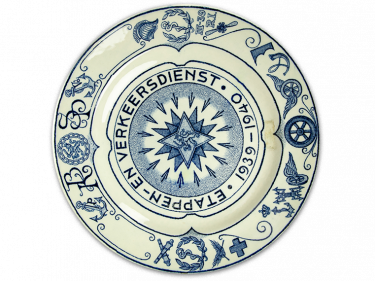
Commemorative plate
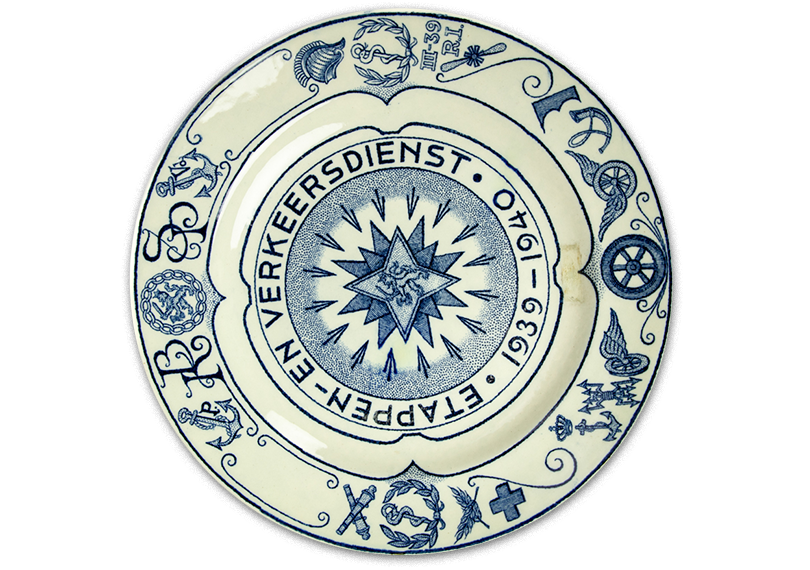
Commemorative plate
Earthenware commemorative plate of the Logistical Services, 1940, Railway Museum Collection.
This plate commemorating the Dutch armed forces’ Logistical Services was made just before the Second World War by De Sphinx, a factory in Maastricht. In the centre there is a radiant star with the Dutch national coat of arms. The emblems of all departments of the Logistical Services are depicted along the edge. The winged wheel (lower right), for example, represents the Railway Engineering Corps and the cartwheel (bottom) represents the Motorcar Battalion.
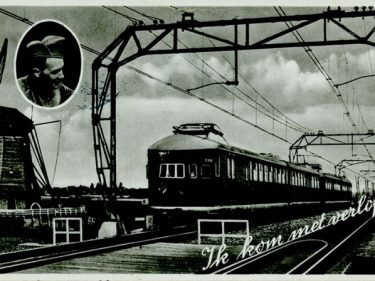
I'll be around on leave
I'll be around on leave
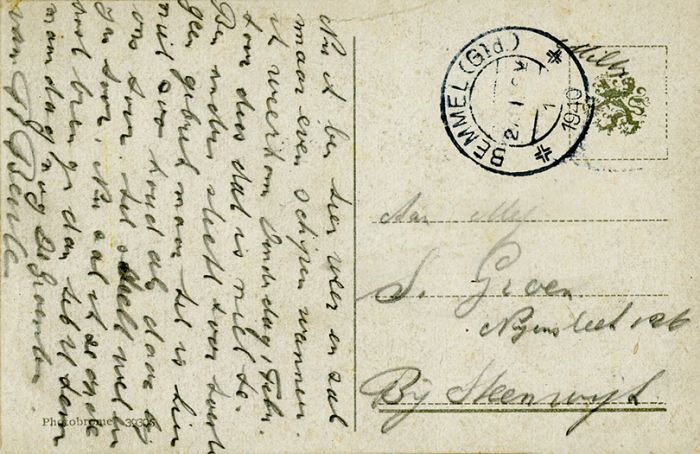
Picture postcard with the text ‘I’ll be around on leave’, 1939-1940, Railway Museum Collection.
During the mobilisation, NS transported thousands of soldiers to the national borders by train. Many of them sent picture postcards home telling their beloved when to expect them on leave. This postcard shows an electric train, type Mat’36, next to a Dutch windmill.
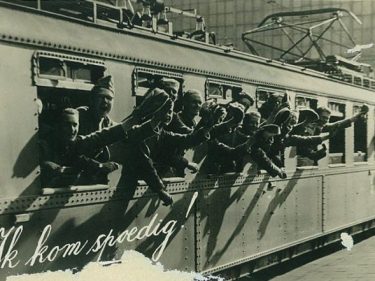
Train carrying soldiers on leave
Train carrying soldiers on leave
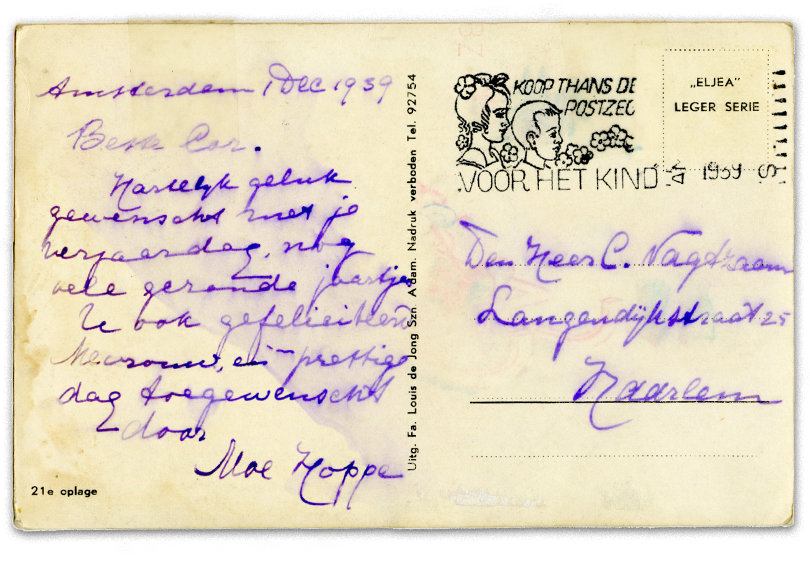
Picture postcard with the text ‘I’ll be around soon’, 1939-1940, Railway Museum Collection.
This postcard for soldiers going on leave shows an electric train carriage, type Mat’24 (also known as the ‘box of blocks’), with soldiers waving cheerfully. This particular postcard was sent to congratulate an acquaintance on his birthday.
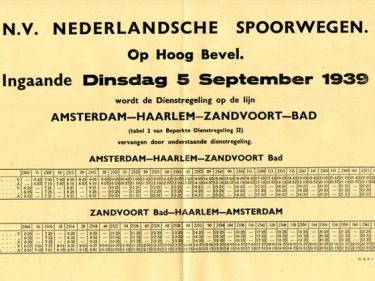
By superior order
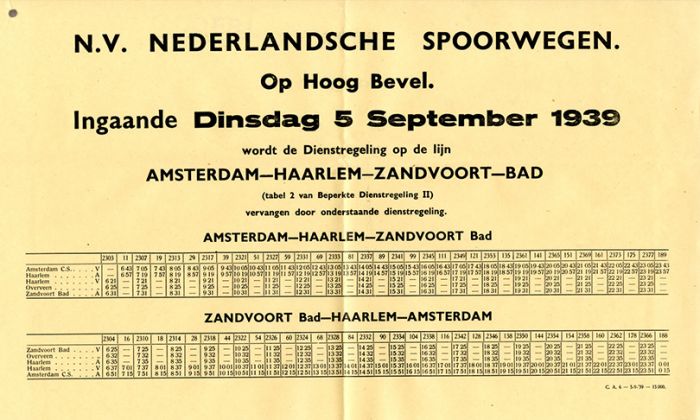
By superior order
Timetable issued ‘by superior order’, dated 5 September 1939, Railway Museum Collection.
The transport of soldiers, equipment and horses went without a glitch; in fact, before long NS could use the trains once again for regular civilian transport. However, the timetables for passenger transport were adapted ‘by superior order’, including the schedule of 5 September 1939 for services between Amsterdam, Haarlem and Zandvoort-Bad.
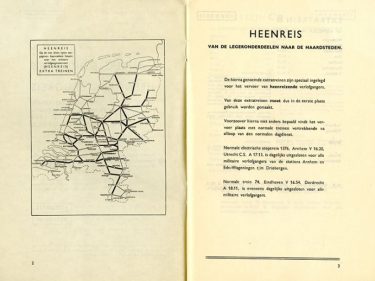
Timetable
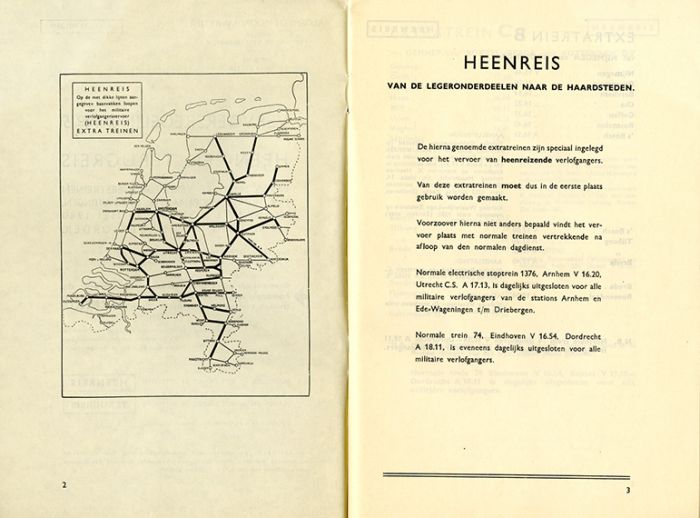
Timetable
Transport timetable No 5, Military Personnel on Leave, valid from Sunday 19 May 1940, Railway Museum Collection.
Transporting military personnel to their positions and from there back home again was an enormous operation requiring NS to deploy additional trains. The railway map, in a booklet on soldiers on leave, shows how the soldiers were transported from their army positions to the various towns and cities in the rest of the country. This timetable took effect on 19 May 1940; by that time the Germans had already occupied the Netherlands.
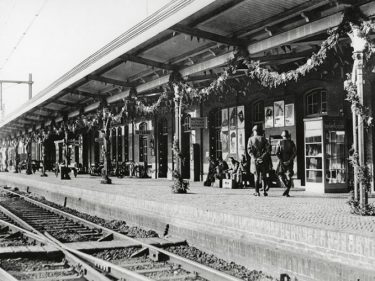
Soldiers
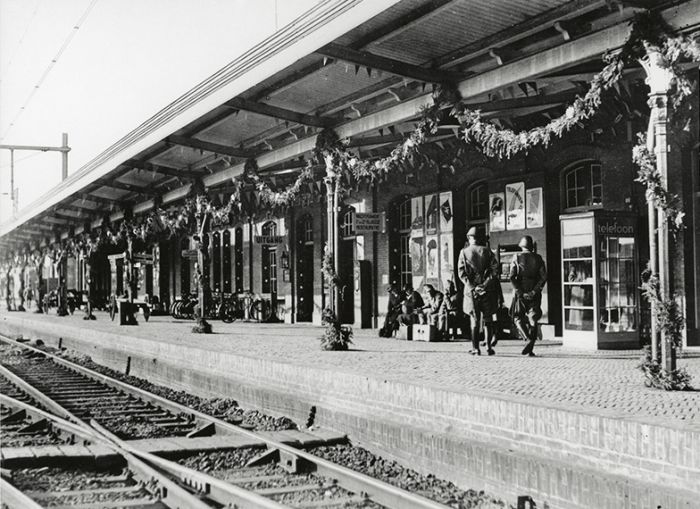
Soldiers
Photograph of Dutch soldiers at a railway station during the period of the mobilisation, Railway Museum Collection.
The picture, taken in the autumn of 1939, shows Dutch servicemen at a railway station decorated in celebration of the 100th anniversary of the railways in the Netherlands.
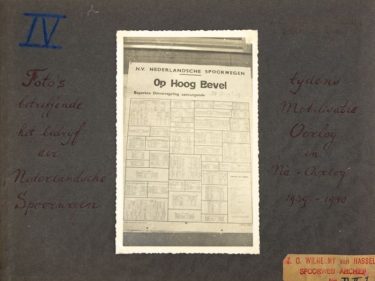
Photo album
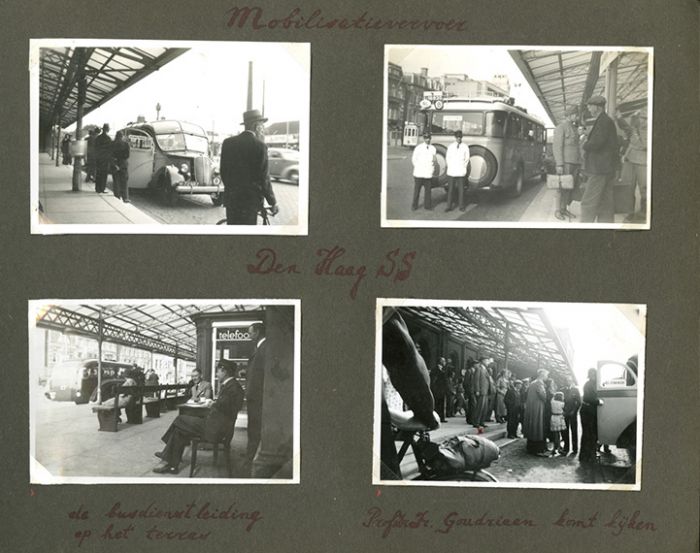
Photo album
‘Mobilisation and War’, photo album of J.C. Wilhelmy van Hasselt, 1940, Railway Museum Collection.
During the mobilisation, J.C. Wilhelmy van Hasselt took pictures of railway operations at and around Staatsspoor Station in The Hague (today’s The Hague Central Station). At the station, posters were hung announcing restricted timetables ‘by superior order’. Van Hasselt also photographed soldiers and horses at the station. The photos of ‘dismantling closed goods carriages into flat open carriages for the transport of cannons’ are of particular interest.
Precautions
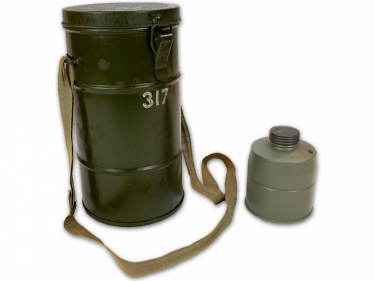
Gas mask
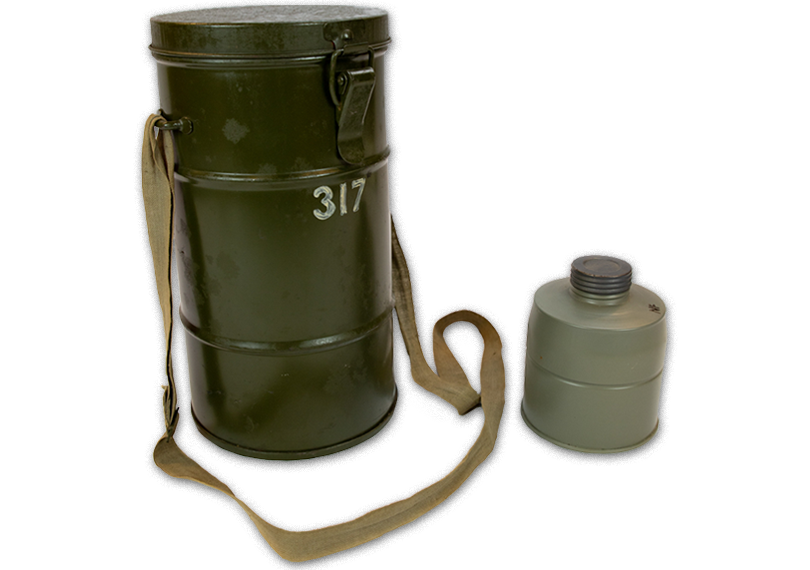
Gas mask
Gas mask with canister, Railway Museum Collection.
NS set up air-raid defence units near major railway stations and workshops to provide protection in the event of a German poison gas attack. These units organised all sorts of drills, for example in the use of gas masks that were supposed to protect their wearers against phosgene and chloropicrin.
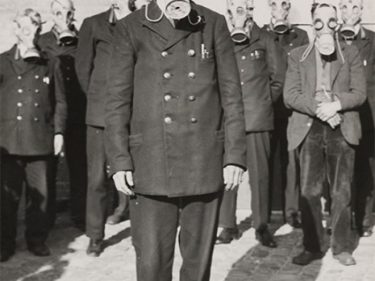
Drills
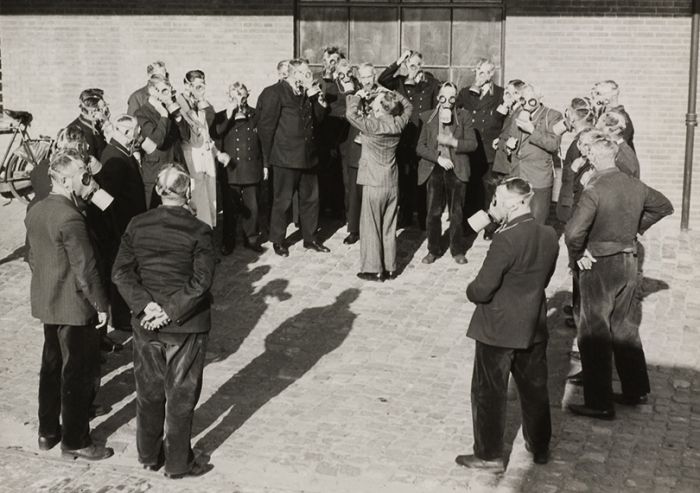
Drills
Photographs of air-raid defence drills at NS’s Haarlem workshop, Railway Museum Collection.
During the period of the mobilisation, the air-raid defence units of several railway stations and workshops performed drills with NS employees. One example is shown here, of gas mask drills near the NS workshop in Haarlem in December 1939.
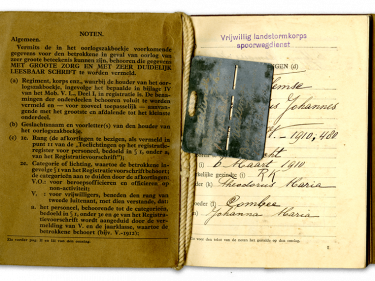
War pocket book
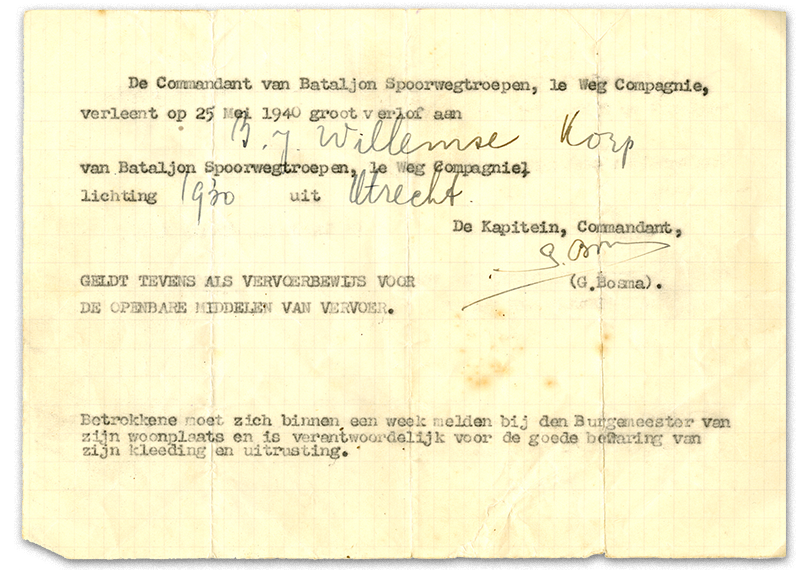
War pocket book
War pocket book of B.J. Willemse, 1940, Railway Museum Collection.
B.J. Willemse was a railway employee and a member of the Railway Service’s Voluntary Home Reserve Corps. He was issued with a pocket book, a gas mask and special protective clothing to practice fire and air-raid defence drills.
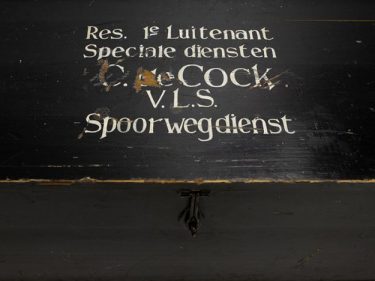
Kit box
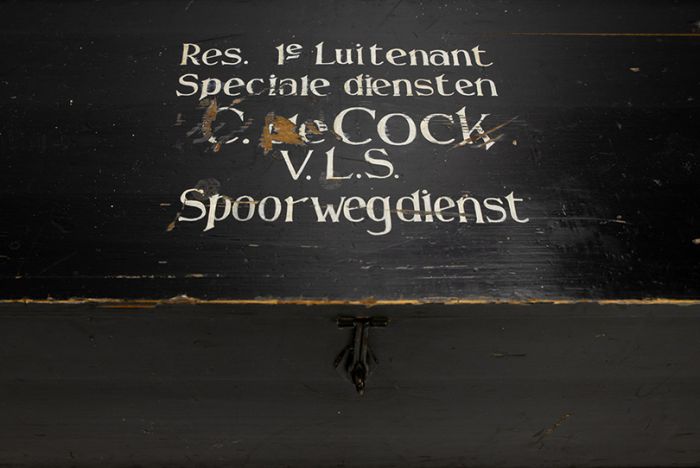
Kit box
Kit box of Cornelis de Cock, 1939, Railway Museum Collection.
Mechanical engineer Cornelis de Cock served as Supervisor 1st Class at the NS Road and Public Works Department in Amsterdam. During the mobilisation he joined the Railway Service’s Voluntary Home Reserve Corps. He kept his clothes, gas mask and other pieces of equipment in a large kit box. Later during the war, De Cock joined the resistance; he was to play a major part during the railway strike in Amsterdam.
Even the trains have ears
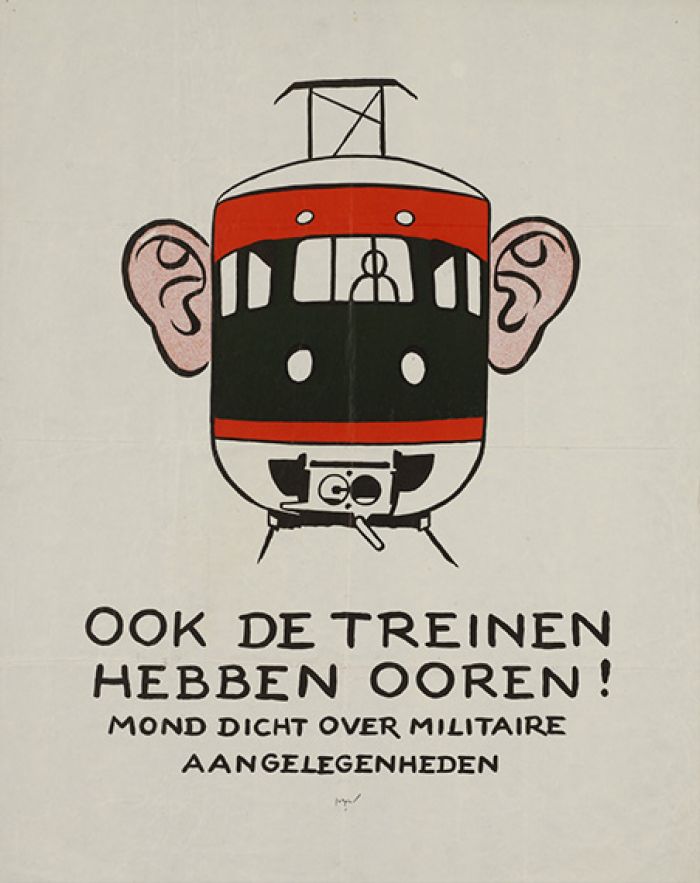
Even the trains have ears
Poster designed by Jo Spier, ‘Even the trains have ears’, 1940, Railway Museum Collection.
This poster, designed by Jo Spier in 1940, was intended to warn Dutch citizens and soldiers against eavesdropping by the enemy, especially as regards military secrets. Clearly, any such information could be useful to the Germans. However, the German invasion was a fait accompli even before the poster was distributed.
Air-raid protection
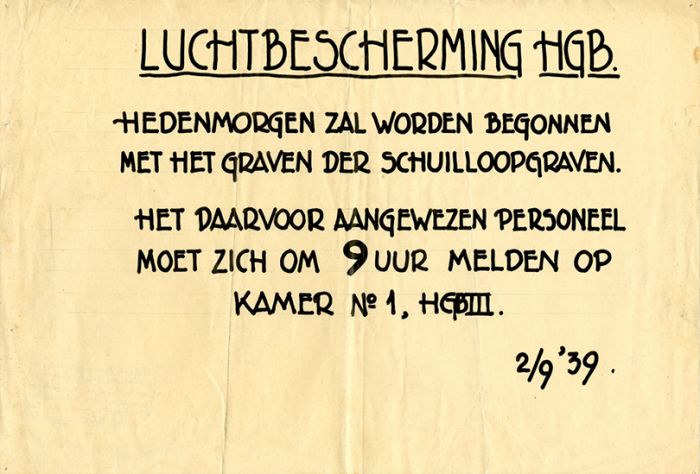
Air-raid protection
Placard announcing air-raid protection measures at Main Administrative Building III, 2 September 1939, Railway Museum Collection.
On 2 September 1939, NS used this hand-written placard to summon several NS employees to report at Main Administrative Building III. They were on duty that day to help dig air-raid shelter trenches right in front of the building.
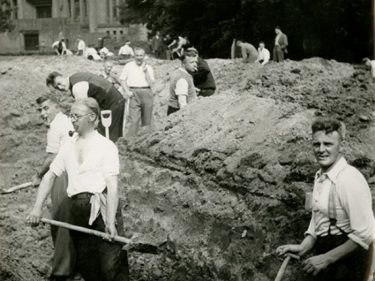
Air-raid shelter trenches
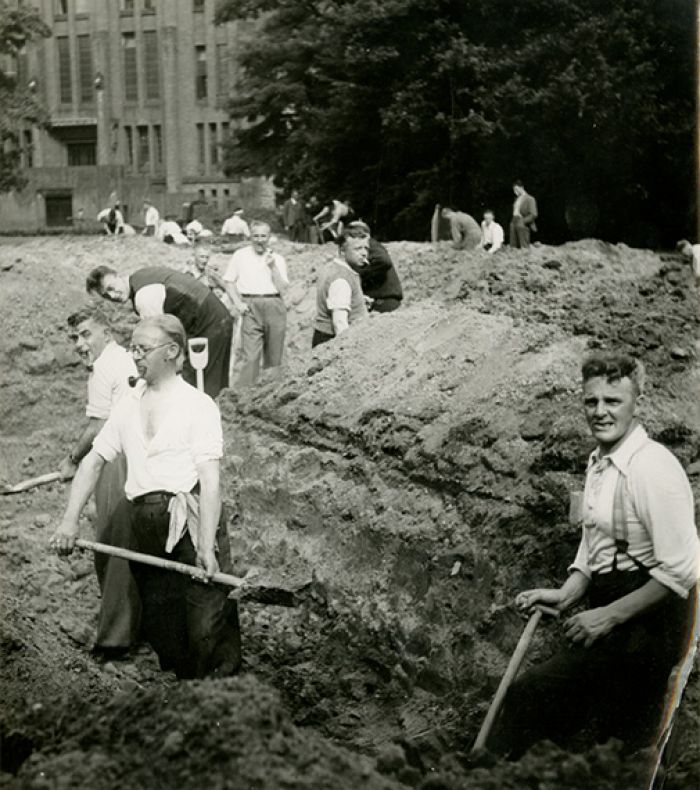
Air-raid shelter trenches
Photograph of air-raid shelter trenches in front of Main Administrative Building III, 1939, Railway Museum Collection.
In September 1939, the park in front of Main Administrative Building III, seat of the NS management board, was transformed into an area for air-raid shelter trenches. The trenches, dug by NS employees, were to provide shelter for employees during an enemy air raid.
Instructions
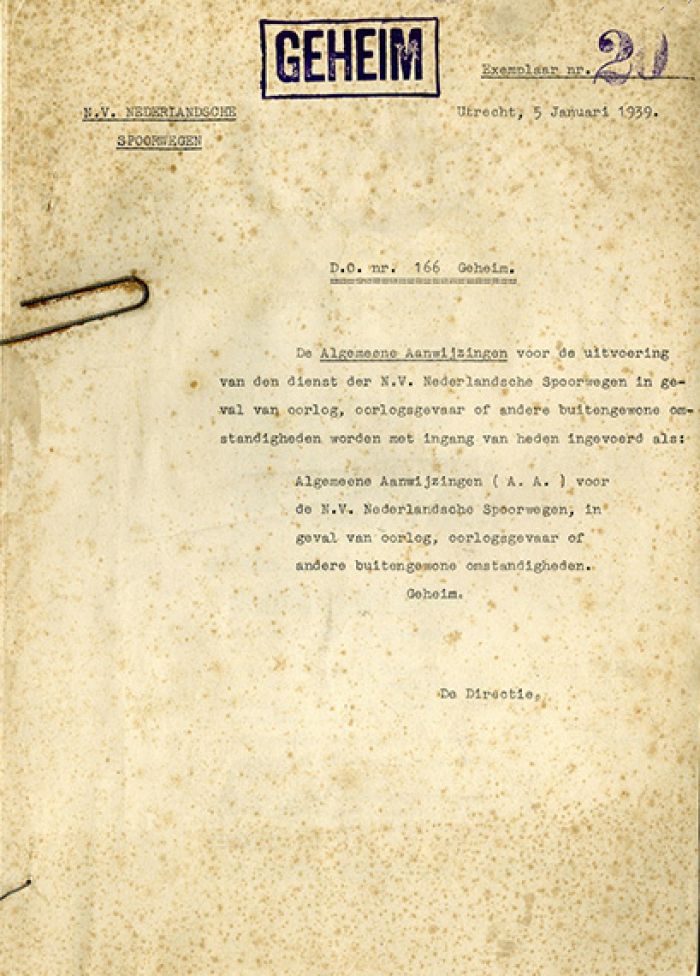
Instructions
‘Instructions’ brochure, 5 January 1939, Railway Museum Collection.
In 1937 the Dutch government compiled a list of ‘Instructions’ ordering civil servants to remain in office during any enemy occupation, unless their continued services were more advantageous to the occupying forces than to the Dutch population. In 1953, when summoned to appear before the committee of enquiry that investigated government policies during the war, the NS management board declared that it had never seen the official ‘Instructions’. The board did however acknowledge the ‘Instructions’ of 5 January 1939, having distributed them itself among NS employees. This classified document offered an overview of all precautions taken by NS in connection with the imminent war.
The Martini Code
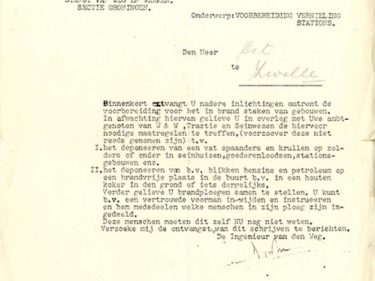
Highly confidential
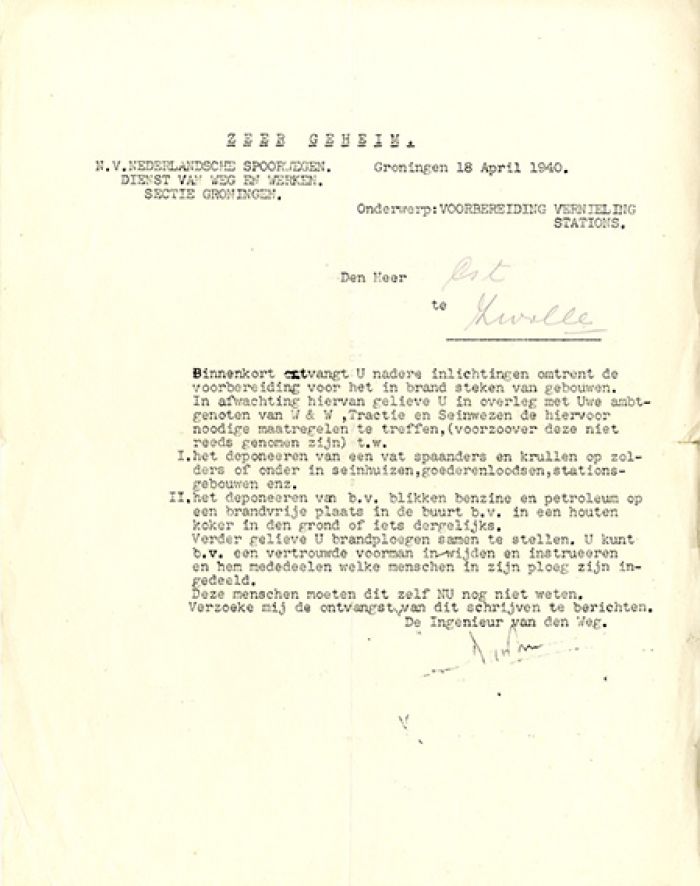
Highly confidential
Document dated 18 April 1940, Railway Museum Collection.
In a highly confidential message dated 18 April 1940, the chief engineer informed the station master at Zwolle in writing that the latter was to receive further information shortly about setting fire to NS buildings. In the event of a German attack, the railway company intended to destroy a large number of its buildings and trains so as to render them useless.
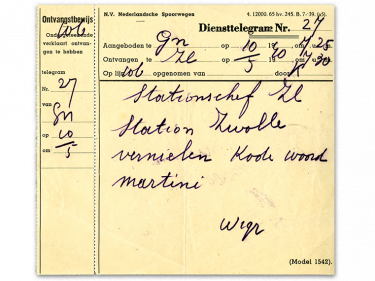
The 'Martini' code
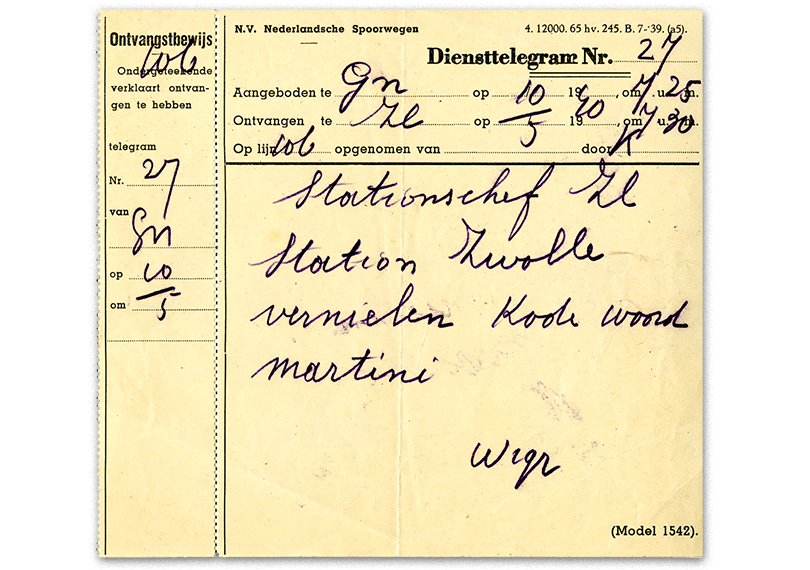
The 'Martini' code
Official telegram dated 10 May 1940, Railway Museum Collection.
On 10 May the station master at Zwolle received the agreed code, ‘Martini’, authorising him and his colleagues to destroy parts of the station. They arranged a collision of several carriages and loaded wagons to make the track impassable. In addition, they set fire to the coal storage area, the sheds for the locomotives, the signal boxes and the goods shed and destroyed the turning tables, water containers and other equipment.
Telegram
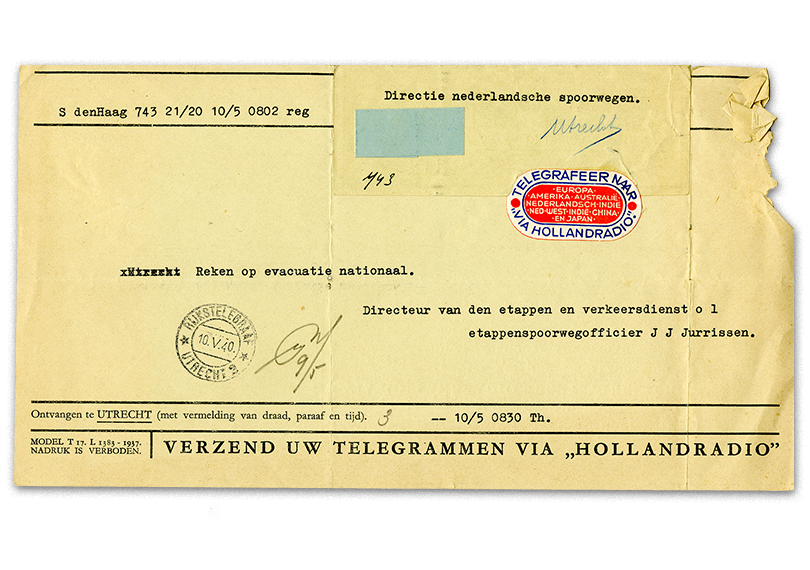
Telegram
Telegram sent by Jurrissen to the NS management board, 10 May 1940, Railway Museum Collection.
Once the German army had crossed the border into the Netherlands, J.J. Jurrissen, director of Logistical Services, sent a telegram to NS with the following message: ‘Prepare for evacuation nationwide’. This also applied to the management board itself, which was transferred from Utrecht to The Hague.
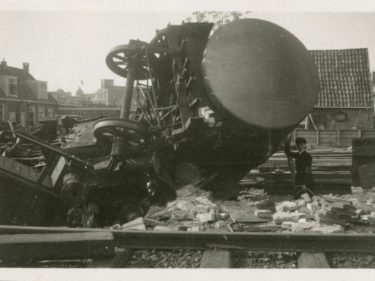
Destroyed rolling stock
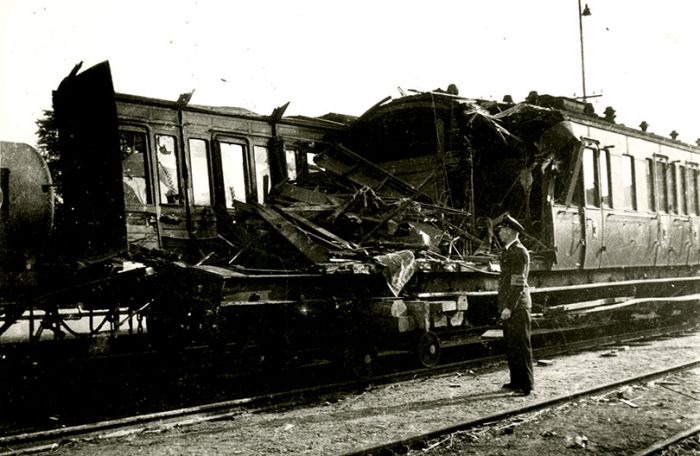
Destroyed rolling stock
Photographs of destructions in Leeuwarden during the war, 10 May 1940, Railway Museum Collection.
On 10 May, after the German invasion, employees at Leeuwarden still managed to cause considerable damage to rolling stock at Leeuwarden station after receiving the ‘Martini’ code. Later that day the Germans themselves took pictures of the destruction after having taken control of the station. The local photographer who developed the pictures secretly made some extra prints and kept them for posterity.
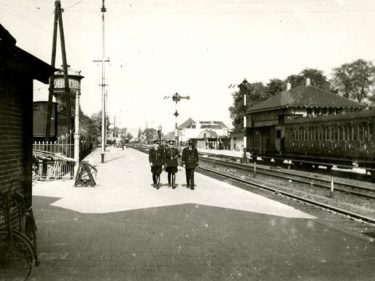
Arrested
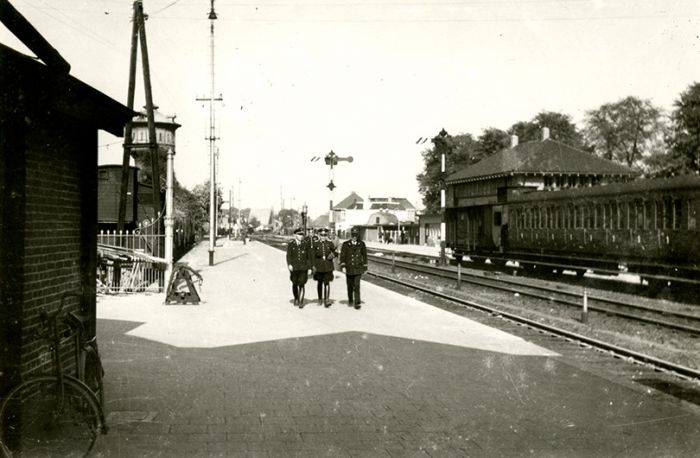
Arrested
Photograph of station master Blijham after his arrest at Leeuwarden station, 10 May 1940, Railway Museum Collection.
On 10 May 1940 Mr Blijham, station master at Leeuwarden, was arrested by the Germans to account for the destruction wrought at his station. He was released that same day. The photo, which shows Blijham (on the right) walking next to two German officers, was probably taken secretly by an unknown photographer.
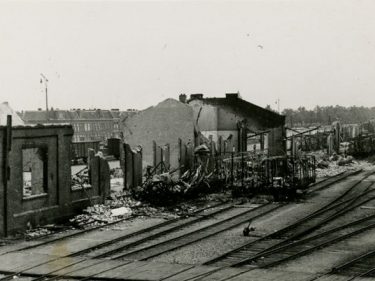
Locomotive shed, Zwolle
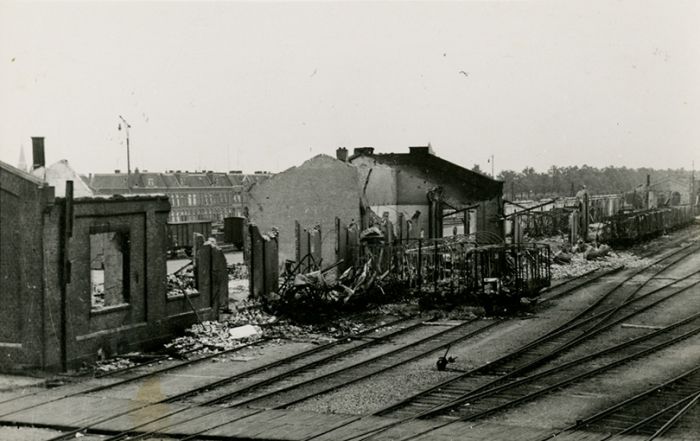
Locomotive shed, Zwolle
Photograph of the locomotive shed at Zwolle railway station after its destruction, 10 May 1940, Railway Museum Collection.
After receiving the code word, ‘Martini’, employees at Zwolle station managed to destroy buildings and rolling stock in the nick of time, just before the Germans arrived. The locomotive shed was badly damaged and rendered useless for the Germans, for the time being at least.
Five days of warfare
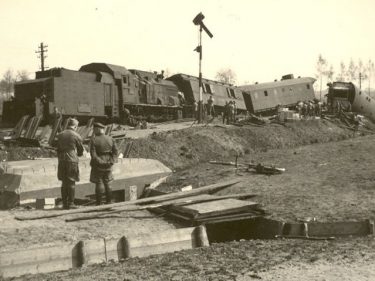
Armoured train near the village of Mill
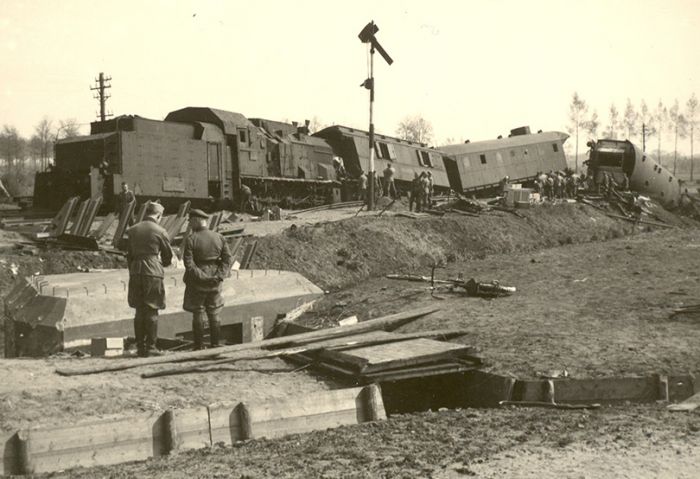
Armoured train near the village of Mill
Photograph of a derailed German armoured train near the village of Mill, taken by the German Wehrmacht, public domain.
The Germans deployed six armoured trains during their invasion of the Netherlands on 10 May 1940. The best known of these is ‘Panzerzug No 1’, which managed to penetrate Dutch territory up to the Peel-Raam Line near the village of Mill in Noord-Brabant province. In the end the train derailed after crashing into a ‘Spargel obstruction’ that Dutch soldiers had erected on the track. This was a structure made of small pointed columns, as shown in the photograph centre-left.
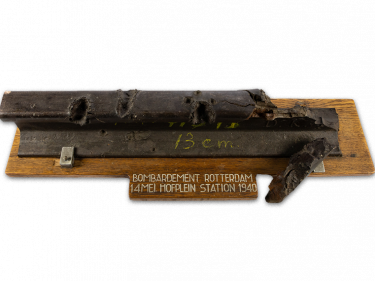
Destroyed rail
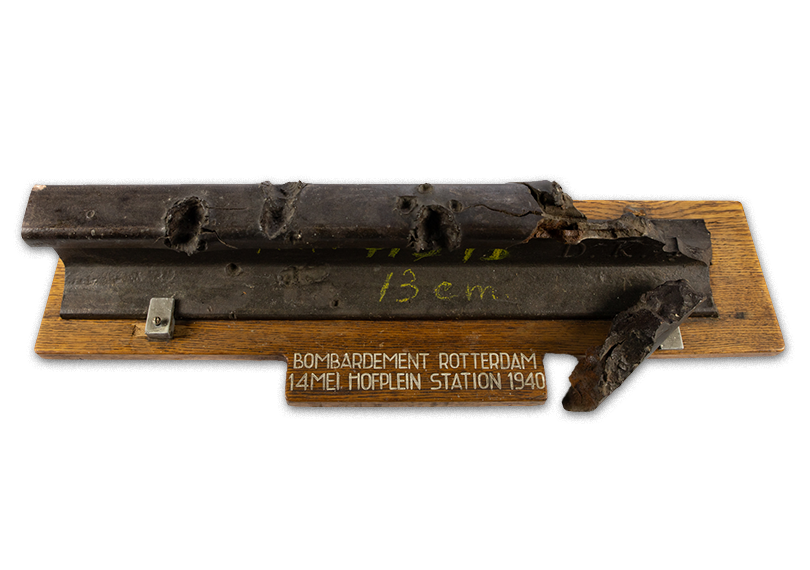
Destroyed rail
Destroyed rail, 14 May 1940, Railway Museum Collection.
Even though the Germans had not singled out Hofplein Station as a specific target for their bombing raid on Rotterdam, the building was badly damaged like the other railway stations in the city. This piece of rail has survived and shows the damage caused by an exploding bomb.
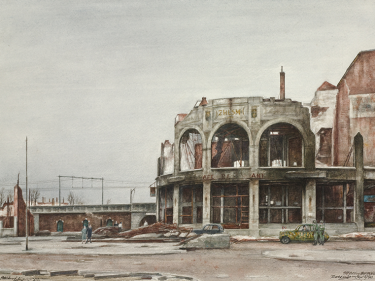
Watercolour
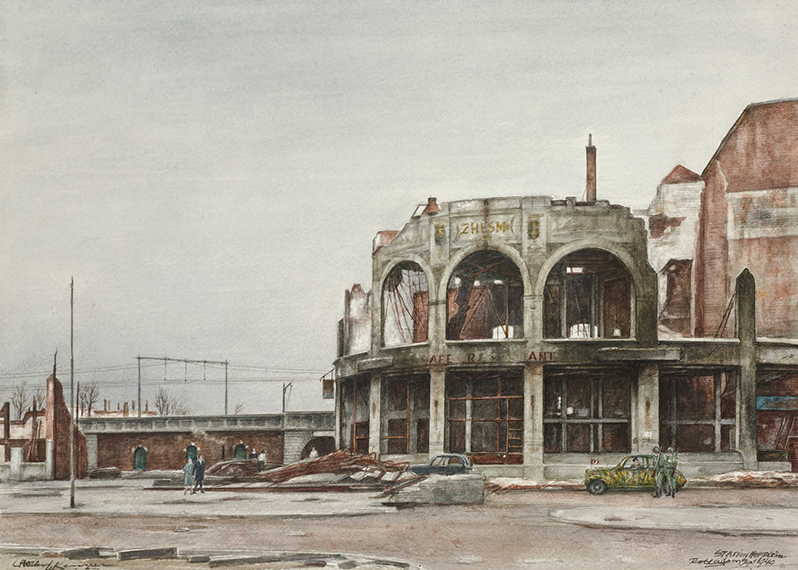
Watercolour
Watercolour by Charles Jean Kemper, dated September 1940, Railway Museum Collection.
Charles Jean Kemper (1913-1985) was an artist who worked and lived in Rotterdam for a long time. After the war he made this watercolour of Hofplein Station after the bombing. This station was the beginning and the terminus of the former Zuid-Hollandse Elektrische Spoorwegmaatschappij, which launched the country’s first electric train services between Rotterdam and Scheveningen in 1908.
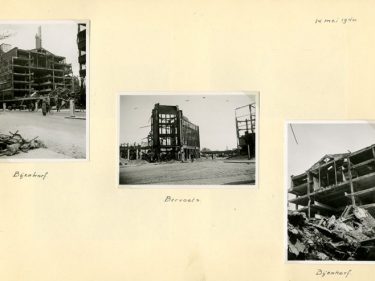
Destruction of Rotterdam
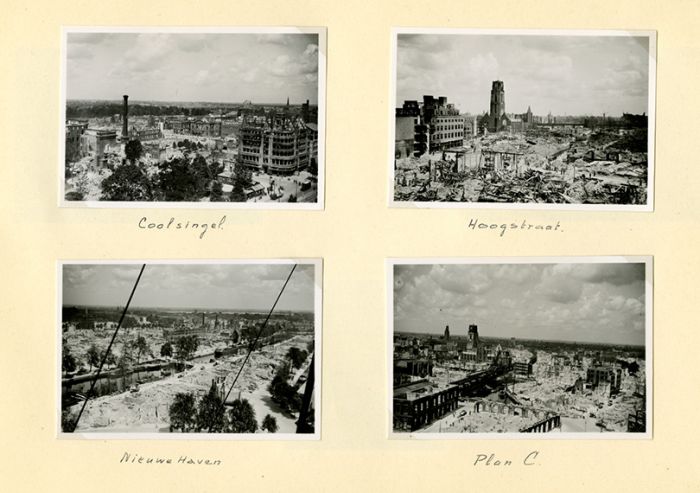
Destruction of Rotterdam
Sketch book with photographs of Rotterdam after the bombing, Railway Museum Collection.
This unknown photographer recorded the enormous damage to buildings, railways and roads in Rotterdam. The pictures with thick plumes of smoke above the city are particularly impressive. One photograph that stands out is the one of a crashed German plane in a field among the cows. The photos were stuck on the pages of what originally was a sketch book, not a photo album.
Picture postcard
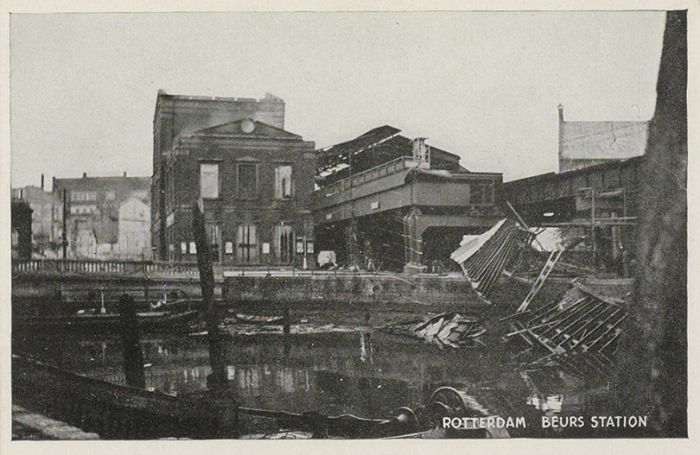
Picture postcard
Picture postcard of Rotterdam Beurs Station after the bombing of the city, 1940, Railway Museum Collection.
The postcard shows the destroyed Rotterdam Beurs Station, and the remains of the railway viaduct on the right. Sections of the railway track ended up in the water.
Emergency waiting room
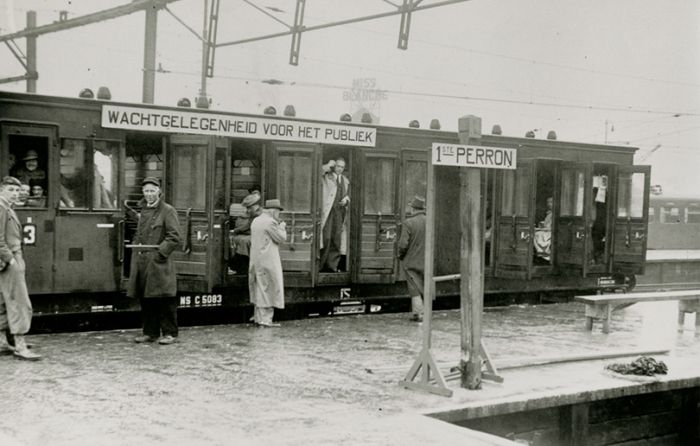
Emergency waiting room
Photograph of the emergency waiting room at Rotterdam Maas Station, 1940, Railway Museum Collection.
The Dutch army capitulated after the bombing of Rotterdam. Daily life in the city continued, however, and before long NS too resumed operations. As Rotterdam Maas Station had been almost completely destroyed, NS decided to convert a passenger carriage into a waiting room as an emergency solution.