Dream journeys
- Activity
- Presentation
- Age
- All ages
Entrance
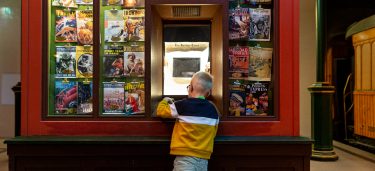
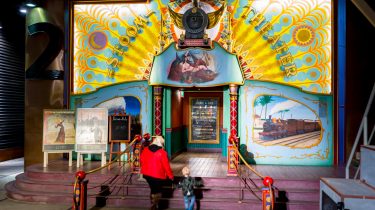
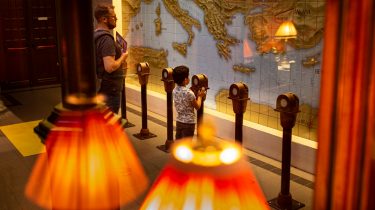
Above the entrance, you can see a painting inspired by the fairground theatres and circuses of the late 19th century. Before you enter a travel agency dating from around 1900, you pass photographs of famous international railway stations. Inside the travel agency, you can see old travel guides, posters, paintings, an old telephone exchange, telegraph machines and a remarkable clock (‘the keeper of time’). On the left is a beautiful model railway of Amsterdam Central Station from 1889.
Platform
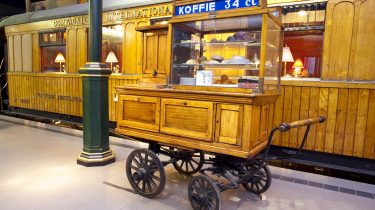
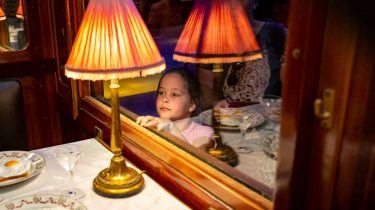
Step onto the platform in the next room and imagine yourself in Paris. On the right stands the dining car of what is perhaps the most famous train in the world: the Orient Express. The tables are laid; it was here that wealthy travellers enjoyed sumptuous dinners during their three-day journey to Constantinople. On the left is another gem: a carriage from the Dutch Central Railway Company (NCS) dating from 1902. This train ran between Utrecht and Baarn, and between Utrecht, Bilthoven and Zeist, carrying affluent commuters from the Gooi region.
Kasbah
The Orient Express travelled from Paris to Constantinople in three days and nights. On the right, you can see an Oriental kasbah. Here, you can really feel the atmosphere of an Oriental city; don’t forget to watch the videos of the Orient Express’s faraway destinations.